Sale Alert

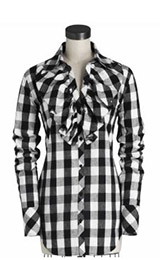
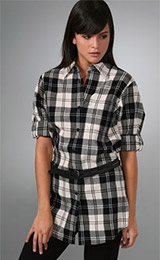
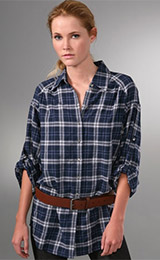
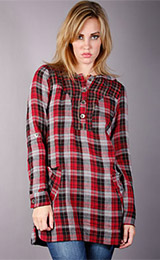
There are some great online sales happening over the next few days:

It must be a sign of the times that Labor Day sales are starting early. Most of the bargains are on Summer merchandise so it’s a good time to stock up if Summer is your dominant season. Remember this season’s list of “must haves” and fill in those remaining wardrobe gaps. Happy shopping!

The Fairest Cape

Today we go off topic to give you a quick introduction to a special place. It is written by my better half Greg, who is a born and bred Capetonian (and has the delicious accent to go along with it). We met in Cape Town, South Africa 22 years ago and have been together ever since. For many reasons Cape Town ranks as one of my favourite cities of all. Its natural beauty is stunning, the people are relaxed and friendly, the weather is gorgeous, and Cape Malay food is sublime. If you ever get the chance to visit, go!

The Cape PeninsulaImagine a mountain range on one of the the Southern most points of Africa, curling into the ocean like a slightly crooked index finger reaching Southwards to Antarctica. This is the Cape Peninsula. In less than half an hour you can drive from the warm Indian Ocean on the Eastern side of this peninsula, to the icy Atlantic Ocean at the foot of its Western slopes. On the way you will see vineyards, Oak trees and “Fynbos”, the indigenous plants that are unique to the coastline of South Africa and constitute the smallest and the richest of the world’s six floral kingdoms.

At the base of the Cape Peninsula is the city of Cape Town, a mashup of Dutch, British, Cape Malay and African cultures. It lies at the foot of its most famous landmark, Table Mountain (Angie calls this “Our Mountain”), and opens out onto a working harbour. The combination of mountain, city and sea is breathtakingly beautiful and quite unique. This is where I grew up. It is where Angie and I met, where we went to University, and where we got married.

Victoria & Alfred Waterfront

These days we are tourists in my hometown. We stayed at a hotel in the Victoria & Alfred Waterfront, a collection of shops, hotels and restaurants that has consumed the harbour over the last 20 years or so. Every morning we enjoyed breakfast with a view of the harbour, the city and Our Mountain. One of the highlights of the trip.

Normal Winter weather is stormy and cold, but we were lucky enough to get two beautiful, clear days. On our first day we walked into a familiar “City Bowl” (downtown Cape Town), a modern city center filled with sassy cafes, small shops, large department stores, modern skyscrapers, historical Cape Dutch architecture and open-air markets. We try to bring home a work of art whenever we travel and this time it was the “shopping lady” that Angie is holding in the picture below. That’s the artist Raymond in the sweet leather jacket and hat. He made the lady using recycled soda cans and wire. Very cool.

Mango's DadLady in RedAngie in Town

The Cape Malay community is one of the distinctive cultures in Cape Town. Cape Malays are descended from slaves (brought to South Africa by the Dutch East India Company in the 16th century) and political exiles from Indonesia. We love the Malay Quarter (also known as Bo Kaap) for its brightly coloured houses. It’s amazing to walk through the area and smell the deliciously spicy fragrances of Cape Malay cooking, with dishes like samoosas, breyani, boboti and waterblommetjie bredie.

Harbour, City and MountainBo Kaap Colours

Southwest of the city is a winding coastline of natural wonder called the Atlantic Seaboard. Suburbs on this coastline like Seapoint, Clifton and Camps Bay are prime real estate because they are surrounded by perfect white sandy beaches, turquoise water and the treacherous cliffs of the Twelve Apostles. This is another favourite area and we spent our second day walking from Clifton to Camps Bay beach and enjoying the views.

It doesn’t feel right to describe Cape Town’s magnificence without mentioning the social and political upheaval that has defined much of South Africa’s recent history. I was 16 when I first took part in a political protest, and we saw political violence up close as Apartheid police cracked down on our liberal University campus. I remember the precise moment in 1990 when I learned that Nelson Mandela was to be released from Robben Island, a prison just a few miles away from Cape Town. This was the turning point. The legacy of oppression still lives on in poverty stricken rural areas outside the cities, but there has been a democratic government since 1994 and the future is brighter than ever.

Clifton Beach

We spent the rest of our South African vacation in a different part of the country, visiting my parents in their new home. But one more night in the city on our way back to Seattle gave us an opportunity to catch up with some old friends and do a final, rushed embrace of the place that was so pivotal in our lives. The University of Cape Town campus, St. Paul’s Church in Rondebosch (where we were married), Cavendish Square in Claremont, my studio apartment in Wynberg, Constantia Nek, Hout Bay, Camps Bay, Suikerbossie, Kloof Nek, Tamboerskloof. We miss it already.

To tuck or not to tuck

Tucking in a top shortens your torso visually. If you have a longer than average torso, this creates balance. If you have a shorter than average torso, it will look even shorter. So people who have short torsos to begin with will generally look better with un-tucked tops.

If only it were that easy! Most of my clients, our forum members and people I see daily, irrespective of their waist length, leg length, body type and bust size, prefer to wear un-tucked tops. I do too. It’s just harder to make a tucked-in top look AND feel good. A tailored, un-tucked top is a lot more forgiving around the midriff, acts as an interesting layering vehicle and you can’t beat the comfort factor.

I have an average waist length and the only time I tuck my top into bottoms is when I wear a mid to high-waisted pencil skirt like you see in the picture below left. I’ll tuck my top into a pair of ‘80’s inspired high-waisted slouchy trousers too, once I get a pair. With a higher waisted bottom, my tucked top stays put and I feel hourglass-y. But in all other instances my tops, which are either form-fitting, belted or voluminous, are left un-tucked.

I don’t like to tuck tops into items with low rises like you see in the picture below right because the top moves all over the show and this drives me up the wall. I also don’t fancy the “blouson effect” of a tucked-in top on a low rise. It hides your waistline in an unappealing way, making you look blocky. Tucking-in a more waist defining top than the grey button down shown in the picture is an option, but only if you’re happy drawing attention to your midriff.

Occasionally I come across a client who prefers to tuck in her tops because it makes her feel less sloppy, especially if she’s wearing a suit. But once we’ve found tops that look flattering, dressy and appropriate un-tucked, there is a change of heart because of the advantages. How do you feel about tucking tops into bottoms? Is this something that you do? If so, what type of top do you tuck into bottoms? If not, why not?

Tucked Shirt with Low Rise Pants

Roundups

Simpler Items

This week's list of top picks list is about basic pieces.

Read More

Assorted Items

Items for Summer, both in and out of air conditioning.

Read More

Casual Summer Vibes

This week's top picks are good for a casual Summer vibe.

Read More

Summery Earth Tones

These items are for those who like to wear casual earth tones in warm and hot weather.

Read More

Hints of Spring

Some tried-and-tested winning items to refresh your style for Spring.

Read More

Dressier Items

An assortment of dressier top picks might be just what the doctor ordered.

Read More

The international melting pot of airport style

My way of passing the time when I wait in long lines at the airport is to sass out what other people are wearing. It’s fascinating. Everyone has their own unique “traveling uniform”. For reasons known exclusively to them, they’ve carefully chosen a specific set of clothes, shoes and accessories to wear for their journey. After many years of spending time in international airports, I can safely say that I’ve seen just about every type of traveling ensemble imaginable. The only thing I haven’t seen are tuxes and ball gowns, but I’ll probably see those at some point too.

In the melting pot of airport style, some fabulous looks are repeated time and again:

  • Immaculately polished flight attendants from some of the airlines. Singapore Airlines is the standout example. I don’t know how these working lasses manage to stay looking professional and perfect throughout the flight. Not a hair out of place. Mind boggling.
  • Well turned out businesspeople in fabulous suits, shoes and coats.
  • Women sporting the pseudo equestrian look with jeans tucked into boots, a tailored jacket or top, scarf and killer handbag. Sometimes it’s leggings and boots with a tunic and huge pashmina. So chic and sophisticated.

From bright Indian saris to spice toned African kaftans and headgear, I also love to see men and women in their regional dress. We refueled at Dakar on the way back from Cape Town, South Africa last week and watching the women board our flight in traditional Senegalese dress as their traveling uniforms was a real treat. They looked so effortlessly stylish and pulled together. I know that part of the reason these outfits appeal to me is that they are exciting and different from my point of view, but that doesn’t stop me enjoying them.

Of course, you also see everything else: sweats, pajama bottoms, short-shorts, big baggy T-shirts with moon bags (fanny packs), leg shortening capris with socks and athletic sneakers, crotch-scraping mini-skirts, head sweatbands, spiked 5-inch stiletto heels, Crocs and beach flip flops.

Some of this is just the variety of life, but it also represents different travel style philosophies. It wasn’t too long ago that people generally dressed up for air travel. Some people still do. There is also the other end of the spectrum where people dress for comfort at all costs. The best example of this approach was the businessman we saw in his pajamas under a long coat. At a glance he was businesslike, with the coat and briefcase, but then at security all was revealed.

Personally, I like to wear comfortable items when I travel, but I also have to feel good about the way I look. I usually wear jeans with ballet flats or boots and multiple layers on top to keep warm during a freezing flight. I also wear a huge scarf to keep doubly warm. What is your approach when you dress for long flights?

Me: long arms, small feet. You?

Retail chains have a real challenge designing garments that will fit the wide range of body shapes out there. I was recently thinking about this variability and it reminded me of something I first heard from a school teacher when I was in primary school. When you reach adulthood, she said, your arm span will be almost the same as your height. Also, the length of your foot will be the same as the length of your forearm, measured from wrist bone and to elbow bone.

This sounded like it had the makings of a great Monday morning experiment here on YLF, so I decided to take my own measurements and ask you if you would like to do the same.

I know I have long arms, so I was convinced that my arm span would exceed my height. I stood against a wall and measured my height which came to 66 inches (167.5 cm). Next, I extended my arms and measured from middle finger tip to middle finger tip, allowing the tape measure to lie flat across the bottom of my neck. It came to 65 ½ inches (166 cm). To my surprise, I was wrong. My arm span is about half an inch shorter than my height. I re-measured but the results were the same. It turns out that I do have long arms for my size (long sleeved items are often a little short on the sleeve), but my dainty shoulder width decreases my arm span. It’s interesting that arm span can be a valid measure of height, particularly after puberty and before menopause when your height is pretty constant.

I then asked Greg to measure my forearm from wrist bone to elbow bone and it came to 9 ¾ inches (25 cm). I measured my own foot, being sure to measure the entire length of my foot by including the very tip of my longest toes and the back of my heel bone (which is above the ground when you are standing). My feet measured about 9 ¼ inches (23.5cm). Small-ish feet comes as no surprise.

Overall, my schoolteacher’s rules of thumb were pretty close in my case. How about you? If you’d like to take part in our little bit of research, take measurements of your height (standing straight against a wall, without shoes and not including hair), your arm span (finger tip to finger tip with arms stretched out horizontally), forearm length (for an arm bent at 90 degrees, from the end of the elbow to the middle of your protruding wrist bone) and foot length (from longest toe to the back of your heel).

Post your measurements in the comments below. Are you surprised? Are the results what you expected?