A Rant About Lengths

I don’t often rant about fashion retail because I also see things from an industry perspective, having been a fashion buyer for many years. I wholeheartedly believe that retailers try their best to give us items that satisfy our clothing and style needs. But garment manufacturing is an extremely tricky business, and retail is fraught with all sorts of complications. It’s impossible to please everyone. 

That said, I have had it with the abundance of too short lengths on skirts, dresses, jeans and trousers. It shouldn’t be so hard to find these items with more coverage at an affordable price. It’s not that I want all of them to be knee-covering or full length. Not at all. I want there to be micro minis and maxis and every length in between. I also don’t mind trendy cropped pants and short shorts, as long as there are plenty of full length options and longer shorts options too. 

A good retail season is always about an assortment — not an overkill of one style. There has been a severe shortage of skirts and dresses that are knee-length and midi for several years. On-trend trousers and jeans that are full length have been few and far between for 18 months. And shorts that cover our thighs are the rarest breed of all.

I REALLY hope this changes for Fall 2013. The runway shows at New York Fashion Week at the moment are showing many, many longer skirt and dress lengths, and full length trousers. I am hopeful! May this trend filter down immediately.

Ensemble: Casual Chic and Boyfriend Jeans

Boyfriend jeans have become mainstream and I am thrilled about it. We desperately needed a basic jeans silhouette with a roomier fit. Over the years, skinnies have become tighter and tighter as denim fabric became stretchier and stretchier. Straight legs and bootcuts are still tight, but not overly so. And wide legs remain a fringe look. Boyfriend jeans give us a wider denim assortment, and that’s how it should be. 

We are living in an age of casualization where descriptions like “casual chic” and “easy elegance” and “relaxed polish” make complete sense. The juxtaposition of opposites is one of the directions in fashion and this in itself is liberating and creative. For example, mix ultra casual pieces with dressier ones. Luxurious fabrications with distressed textures. And looser fits with tailored items. 

So here is an ensemble formula that begins with a casual pair of boyfriend jeans, matches them with easy tops, structured toppers, and allows the footwear to give the outfit its personality.

The components of the ensemble:

Boyfriend Jeans

Remember that boyfriend jeans needn’t be extra baggy and slouchy. Find a bagginess threshold, waistline, wash and length that suits you. Roll the hems or wear them unrolled. 

Top

I’ve chosen soft tops like a basic blouse and pullover with an inset printed silk panel, both of which are roomy to create a relaxed vibe. Comfortable and forgiving. Layering tees and button-down shirts are other options. Wear them tucked or un-tucked. 

Topper

I’ve kept the toppers structured and dressy to create a sophisticated juxtaposition against the casual jeans and relaxed tops. Think leather jackets, blazers, military looks and Chanel-esque jackets. Or any jacket that is at least semi-structured. 

Footwear

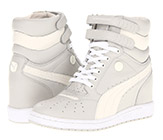
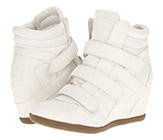
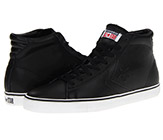
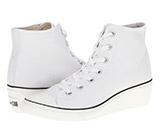
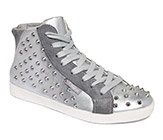
I’ve shown 11 on trend options here, some dressy and some casual. Each style of shoe can be worn with any combination of jeans, top and topper depending on your style preferences and the dress code of the setting. Pattern mix or stick to solids. Add colour or stay neutral. Here are your footwear options to wear with rolled or unrolled boyfriend jeans: 

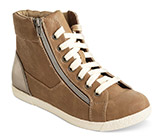
  1. Casual Booties
  2. Mid-Calf Flat Boots
  3. Slipper Flats
  4. Pointy Toe Pumps
  5. Pointy Toe Pumps with Ankle Straps
  6. Low Heeled Pointy Toe Pumps
  7. Flat Oxfords
  8. Peep Toe Booties
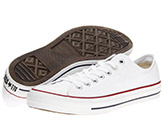
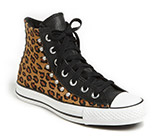
  9. Converse Sneakers
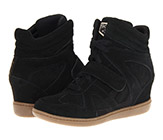
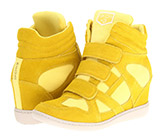
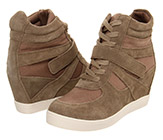
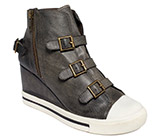
  10. Wedge Sneakers

Finishing Touches

If you tuck your top, by all means wear a belt. I’ve chosen a clutch, but your bag choice is whatever floats your boat. Add jewelry as desired. 

As with all the formulas, I sow the seed of an idea. The next step is to substitute the items so that they work for YOUR style. After all, fashion is what we buy, but style is how we wear it.

Twenty Tips That Will Make You a Savvy Shopper

Here’s a rundown of shopping strategies that I’ve found helpful when I shop for myself and with clients. 

  1. Shop with four essential shopping tools at all times: Your style goals, a shopping list, a realistic budget and a good attitude are all very important.
  2. Wear great underwear when you try on clothes: It’s the best way to assess good fit.
  3. Take companion items with you to the store: If you need to find a jacket that goes with a particular dress, bring the dress. If you need to match a skirt with a top, bring the skirt. If you’re shopping for event wear, bring heels. 
  4. Focus on the FIT and not the size: Your goal is to shop for the body you have right now
  5. Move across departments to find that perfect fitPetite, regular, tall and plus size departments are not as straightforward as you might expect. 
  6. Don’t forget about the power of alterations: Sometimes a perfect fit can be achieved by a quick and easy alteration. 
  7. Make use of the Triple “P” Purchasing Principle: Be patient, picky and practical. Great wardrobe items come to those who wait, and shopping for an imaginary lifestyle leaves you with a closet full of clothes and nothing to wear. 
  8. Use the Item-Outfit-Capsule test for new purchases: This helps to eliminate closet orphans.
  9. Shop seasonally: It keeps your style refreshed and those fashion feet moving. 
  10. Shop frequently: The more you shop, the more you hone your style and the more familiar you are with available merchandise. Note that I don’t mean that you should buy more. Quite the contrary. Shopping more frequently should lead to less overall shopping time and fewer overall purchases. If it doesn’t then you’re doing it wrong.
  11. Shop at the best time of the season: Shopping in the first three to four months of the new shopping season often yields the best results
  12. Do not be swayed by low prices: Bargains can be shopping mistakes. Assess a sale item in the same way you would assess a full priced item. 
  13. Buy occasion wear when you see it: We often make compromises when we leave our occasion wear shopping till the last minute. Having a fast fallback outfit option for fancy occasions is ideal
  14. You are always worth full price: If you love it and can afford it, buy it. Especially if your size sells out fast. 
  15. Spend money on shoes, bras, jackets, coats, eyewear and handbags: Often, these items are wardrobe workhorses and not a one season thing. 
  16. Replenish basics at least once a year: Don’t neglect items like underwear, sleepwear, loungewear and socks that deserve your attention too. 
  17. Make your final decisions at home: The most important dressing room is the one you have at home, so make sure you still love the item when you reassess it in front of your mirror.  
  18. Leave no retail stone unturned: You never know when or where you’ll find that hidden gem
  19. Never shop when you are hungry or tired: This can lead to unclear thinking and bad purchases. 
  20. Learn from your shopping mistakes: Despite our best intentions, we all make shopping mistakes. Learn from the mistakes and try not to make them again. 

I’m sure you’ve got a few more shopping tips up your sleeve. I’d love to hear them! 

Roundups

Simpler Items

This week's list of top picks list is about basic pieces.

Read More

Assorted Items

Items for Summer, both in and out of air conditioning.

Read More

Casual Summer Vibes

This week's top picks are good for a casual Summer vibe.

Read More

Summery Earth Tones

These items are for those who like to wear casual earth tones in warm and hot weather.

Read More

Hints of Spring

Some tried-and-tested winning items to refresh your style for Spring.

Read More

Dressier Items

An assortment of dressier top picks might be just what the doctor ordered.

Read More

Link Love: Editorial Eye Candy

Fashnberry does a great job of compiling fashion editorials from around the world. I love this arty Vogue Korea magazine shoot that mixes traditional folk painting elements with modern clothing. And look at those headpieces.

The focus on blue denim paired with crisp white, the strong shoulders, the nod to the eighties, the baggy trousers and slouchy silhouettes… I was quite enchanted with these images for Vogue China as well.

For the 2013 Spring/Summer collection, French label Courrèges reprises a selection of the designer’s mod classics in a variety of colours and signature fabrics. It’s especially fun to see the styling similarities between the two different eras.

Fab Links from Our Members

Suz enjoyed perusing the New York Times’ archive of Oscar red carpet looks that spans 15 years.

If you enjoy outfits with an androgynous touch, Kyle recommends checking out Faintly Masculine for some extra inspiration.

Nadya loved The Curvy Fashionista’s article about accepting compliments.

Deborah has been working her way through the archives of the Odyssey Home blog, and found it fascinating to watch how Stephanie has honed and streamlined her style. The comments, more so than the posts, give some insight into her process.

Angie thought that Sally’s tips on how to avoid hat head were spot on.

Celia found this post about how wearing a corset affects the way a dress drapes very informative.

“When it comes to pattern matching, the density variation is far more controlling than pattern type.” Vildy encountered these pattern mixing guidelines over at Tweed in the City.

Manidipa was intrigued to discover why exactly men stopped wearing high heels.

Do you sometimes avoid the camera because you are not liking what you see in the mirror? Beth Ann would like you to read these uplifting and very wise words of advice.

Annagybe reports that The Smithsonian Magazine has a fashion blog. Here’s the history of sequins.

Refinery29 brings us the office looks of six stylish NYC women. MaryK would love to wear almost all of these.

How to Fit a Tailored Jacket

With three definitions of correct clothing fits these days — tailored, body con and oversized — creating guidelines on how to fit a jacket is not as straightforward as it used to be. Add in the intricacies of design detailing that affect fit and things get even more blurry. But it’s worthwhile understanding the basics of how to fit a tailored jacket like a blazer as a starting point. Note: We are NOT talking about outerwear like coats and puffers.  

Make sure you’re wearing the correct layers underneath the jacket before you check it for fit. Stick to a shirt, blouse or lightweight sweater plus underwear. Here are the guidelines:

  • Shoulder Fit: The shoulder seams should fit squarely on either side of your shoulders. But if the jacket has “sharp shoulders” (a trendy and modern version of shoulder pads), the shoulder seams should fit wider than the edge of your shoulders. A jacket with dropped shoulder seams will fit two to three inches below the edge of the shoulder. 
  • Bust Fit: The jacket should skim comfortably over the bust without wrinkles, and as far as possible the bust darts should be in the right place. It’s first prize for the jacket to fit well when buttoned or zipped. However, fitting a jacket over a large bust line so that it fits everywhere and doesn’t pull at the bust is a very tall order. That’s why purchasing a jacket that fits but does not close is fine by me, because we leave our jackets open 90% of the time anyway. Furthermore, pear shaped lasses might find that jackets fit everywhere but that last button pulls when you fasten it. Leave the jacket open and your fit challenge is solved. Of course, outerwear that protects you from the elements MUST fit when it’s closed.
  • Armhole Height: Make sure that things don’t look and feel tight under the arm. And sometimes armholes can be cut too long for your frame and look off too. 
  • Waist Fit: The waist should skim over the contour of your body and be in the right place, so check that it’s not too high or low — both in front and at the back. 
  • Back Fit: If the jacket wrinkles because it’s pulling, the fit is too snug or the armholes are cut too small for your frame. But jackets can also wrinkle when they are too large, so watch out for those wrinkles too. 
  • Sleeve Fit: The silhouette of the sleeve can make or break the look. If the sleeves are bunching and creating lines on your arms from pulling, they are too tight. Size up or choose a jacket with a roomier sleeve shape. If the sleeves are not streamlined enough, but the rest of the jacket fits, choose a jacket with a slimmer sleeve fit. 
  • Sleeve Length: I prefer jackets with longer sleeves, so I’m going to suggest three quarters of an inch over the wrist as a great length. An inch is also good. Longer than that, and things start to look ill-fitting. 
  • Overall Length: This depends on your style preference and what you find flattering. Generally, shorter jackets that end on the high hip bone, or a few inches below your bottom, are flattering. Jackets that end in between these points need to be assessed case by case. 
  • Stance Position: A stance is where the highest button on a jacket hits the chest. Its position depends on your style preferences too. Some prefer low stances whereas others prefer high stances. Just make sure you like the position of the stance when you fit a jacket. 

A few extra fitting tips: 

  • Comfort Factor: Can you drive, comfortably sling a bag over your shoulder, and pick up a child or pet wearing the jacket? Do the reach test. Remember that you are not expected to do a yoga class and jumping jacks in a jacket so don’t go overboard with the comfort factor. 
  • Rolling: If the jacket keeps on rolling back off your shoulders while it’s unfastened, hang it back on the rack. Jackets should stay put. 
  • Individual preferences: Some of my clients like their tailored jackets very fitted, when to my eye they look a little snug. And I like my tailored fits just a little roomier than most, and to some, my jackets might not seem fitted enough. So take into account your personal fit preferences too. After all, YOU have to wear the jacket and feel fabulous in it. 

Once you’ve got a handle on how to properly fit a tailored jacket, you’ll find it easier to achieve the correct fit on body con and oversized styles. But if you’re still unsure, feel free to ask those questions on our forum and we’ll help you out. 

Do you find jackets hard to fit? If so, what are your fit challenges?