Link Love: Print and Pattern

Angie had scarcely finished writing about camouflage patterns when I stumbled upon the “Creative Camo” post on Style Sight. The traditional khaki and olive camouflage colours are not flattering on me, but I thought the pencil skirt in soft shades of pink quite pretty.

Speaking of a conversational print: Carven designer Guillaume Henri has created a dress that appears to be inspired by fashion magazine collages (look 15). In the meantime Max Mara is mixing animal print with plaid for Spring 2013. Is this something you would wear?

Colourful lifestyle brand marimekko is teaming up with Finnair. One of their Airbus aircraft is sporting the recognizable floral pattern, and passengers will get the full marimekko treatment with a special line of tableware and textiles.

Fab Links from Our Members

Beth Ann is thrilled to have discovered Erica Bunker, a home sewer with a good eye for fashion who has great tips for the DIYers among us.

Vildy points us to Escama Studio, a fair trade company specializing in bags and other accessories made from pop tops and pull tabs.

Caro enjoyed reading Kim France’s, former Editor in Chief of Lucky Magazine, take on the merits of a uniform for work and travel.

Danielle over at Final Fashion wrote an interesting article on why every woman should have a red dress and a blue dress. Laurinda was fascinated to discover more about the cultural signals associated with these colours.

Doulahil loves browsing the funky, dapper style shown on What My Boyfriend Wore and has picked up loads of style tips along the way.

Good design has such a high degree of longevity, Angie points out so rightly. This 1966 coat, these two mod frocks and this fab patterned black and white dress would all fly in 2013 if you updated the footwear, makeup and hair.

Mochi informs us about the upcoming “PUNK: Chaos to Couture” exhibition at the Metropolitan Museum of Art. This exhibit will examine punk’s impact from the 1970s to its continuing influence on high fashion now.

What To Do When the Current Trends Aren’t For You

One obvious answer to this question is to stick to wearing classic pieces. But that’s not your only solution, and certainly not an appealing one when wearing classic pieces from head to toe is not your cup of tea. Don’t worry! There are plenty of non-trendy stylish solutions that can ensure you don’t feel left out of the fashion scene. 

Every season I have clients who aren’t that into the current trends, and right now that means items like slouchy trousers, oversized proportions, booties and shooties, leather, skinnies, faded denim, body con fits, distressed items, pattern mixing, boyfriend jeans, semi-tucks, tough girl vibes and tomboy vibes have not tickled their fancy. So we refresh their look in ways that are still in style, but bypass most of the trends. Here’s how:  

  • Introduce classic pieces in atypical colours: For example, you like classic pencil skirts and slacks, but only wear them in neutrals. Add one in a teal, citron, burgundy, purple or plaid to change up the landscape of your wardrobe. 
  • Go Avant-Garde: Avant-garde pieces are not associated with a particular fashion era, so they have a high degree of fashion longevity. Wear them with updated classics and you are set. 
  • Go Retro: Conversely, retrograde items are strongly associated with a particular fashion era, but as long as they are worn with modern classics (or ultra trendy pieces), they’ll look fab.
  • Go Flirty and Feminine: Keep the waistline defined and go to town with flared skirts, tailored jackets, fit and flare dresses, pretty pumps and romantic florals.
  • Go Arty: Playful and whimsical items, just like retro and avant-garde pieces have a high degree of longevity. Mix them up in fun layered ways and interesting proportions to refresh your look.
  • Find trendy pieces in tailored cuts and neutral colours: You might like more of the trendier items if you choose pieces that are structured and neutral. For example, wear boyfriend jeans in your usual size, and don’t size up. Choose a two toned jacket style in charcoal and black. Wear a leather blazer instead of a biker silhouette. 
  • Mix up the classics with the trends: If you do manage to find a couple of trendy items that tickle your fancy, wear them with one or more classic pieces to keep the outfit grounded. This is hands down my favourite way of dressing. 

The reason the above strategies work is because we are finally living in a fashion era that is accepting and encouraging of all sorts of outfit juxtapositions and silhouettes. So with a certain amount of current style savvy and attention to fit, almost anything goes. Gone are the days that what was in one season, is out the next. Fashion just doesn’t work like that anymore, and I am THRILLED about it. 

Of course, there are always going to be silhouettes, proportions and items that are “of the fashion moment” and trending particularly strongly from one season to the next. That’s what keeps the fashion industry afloat and our fashion feet moving. But that doesn’t mean that you’ll be unstylish if you don’t wear them. So chin up when the current trends aren’t for you. There is more than one way to look stylish.

Nordstrom Roundup: Fun Toppers

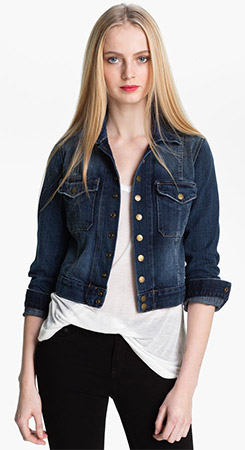
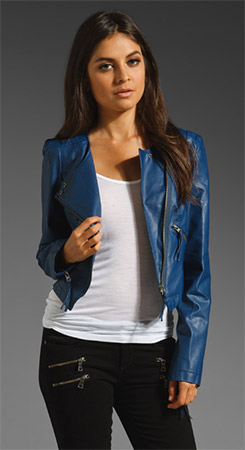
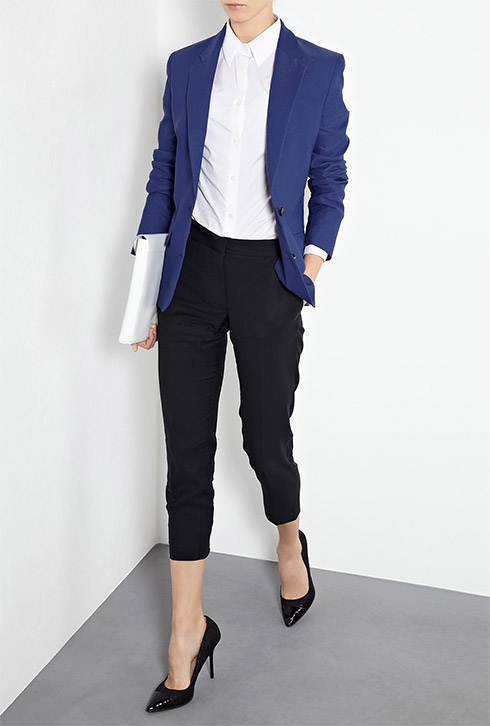
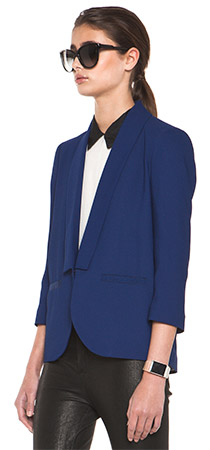
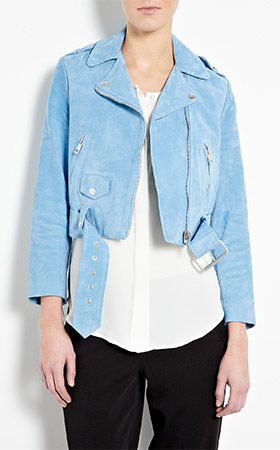
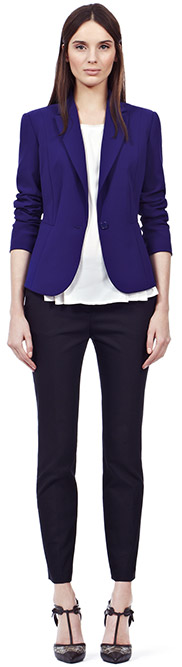
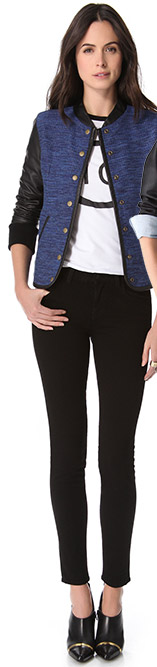
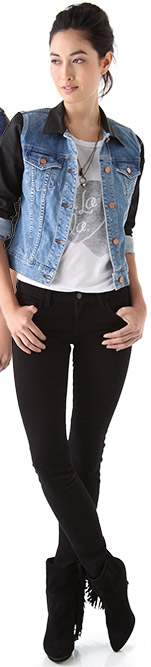
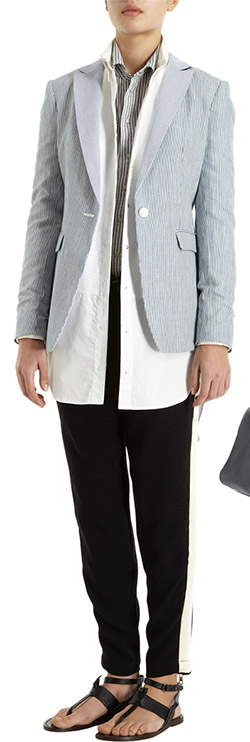
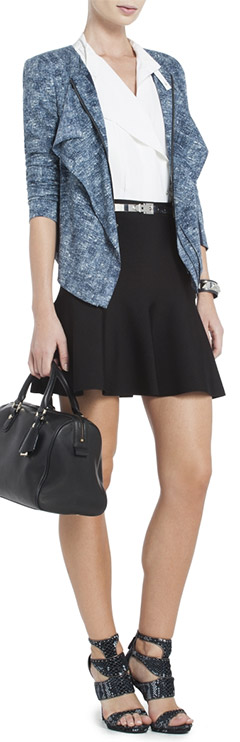
There’s nothing quite like a fun topper to give an outfit structure and personality. Here are six versatile jackets that take on a multitude of fashion personas. 

I rarely fasten the front of my jackets. I have a few that look best worn closed, but for the most part I prefer them worn open. I enjoy the vertical centre front line that is created down the front of the body when a jacket is worn open, as well as the roomier fit. How about you?

affiliates
This post contains links that earn commissions for YLF.
Roundups

Simpler Items

This week's list of top picks list is about basic pieces.

Read More

Assorted Items

Items for Summer, both in and out of air conditioning.

Read More

Casual Summer Vibes

This week's top picks are good for a casual Summer vibe.

Read More

Summery Earth Tones

These items are for those who like to wear casual earth tones in warm and hot weather.

Read More

Hints of Spring

Some tried-and-tested winning items to refresh your style for Spring.

Read More

Dressier Items

An assortment of dressier top picks might be just what the doctor ordered.

Read More

Behind the Seams: Fabric Selection

Series
“Behind the Seams” is written by Jessica Gold Newman, CEO of Dobbin Clothing in NYC. In case you missed it, here’s more background on Jessica and the series.

Like most companies, Dobbin’s design process really starts with fabric. Our first step is to visit the offices of various fabric agents in New York City, and to contact the fabric mills and agents we’ve worked with in places like Los Angeles, Paris and even New Jersey. Fabric agencies are small — usually just one or two people — but they each represent multiple fabric mills across Europe and Asia. While mills employ agents all over the world, the agents in New York usually service the entire USA, part of what’s kept the Garment District the epicenter of the American fashion industry. 

Small designers like us tend to buy more expensive European fabric ($11-$30/yard.), because the minimums for ordering are more achievable and because we prefer the high quality of these textiles. Many of the Italian mills we use have been in business for over 100 years, and have vast experience and technology for producing the best textiles on earth.

At agents’ offices (and at fabric shows in NYC), Catherine and I start collecting headers (fabric samples stapled to labeled card stock) and corresponding pricing lists of the fabrics we think might fit our line. Once we have a pile of contenders, we spend days going through the fabrics carefully, looking for the best feeling, most wearable, washable, and luxurious of the bunch. We also scrutinize each mill’s color card for each fabric to see what might work for the season’s colors, and keep a careful eye on pricing so that we don’t fall in love with fabrics that would push us outside of our price range (lest we have to pass the cost on to customers). 

At Dobbin, we’re typically looking for thicker, stretchy fabrics that have both structure and ease. We favor knits, pant fabrics like stretch twill, canvas and flannel, and different kinds of silk for shirting. We go through the process of boiling down the heap of fabrics to our favorites to create a comprehensive collection in which the pieces, fabrics and colors all work together.

At that point, we then have to re-contact fabric agents to find out the fabrics’ availability and minimums. If the fabrics we like won’t arrive on time for production for the season, or if a mill’s minimum for ordering is too high, we then go back to the drawing board to find a similar replacement. It’s kind of like a jigsaw puzzle; throughout the design process, we’re constantly piecing together the very best collection we can, with changes to one piece in turn causing changes in any number of others. Large companies have sizable design, sourcing, pattern making, production and merchandising teams that work together to find and choose fabrics. In our case, it’s just the two of us doing the same thing, though on a smaller scale.  At this point, because we only have two seasons of customer data and feedback, we’re also operating more on instinct than on numbers, as a larger company likely would.

The next step is ordering sample yardage (usually about 10 yards of each fabric). Our pattern maker uses the sample yardage for draping, pattern making and sampling. If we’re on a very tight timeline (which we usually are!), we sometimes have to order the larger run of fabric we’ll actually be using for production, and simply cut some yardage off the end for sampling.

A large UPS bill later, bolts of fabric start to show up at our office. That kicks off the pattern and sample-making process, which we’ll be covering in the next post!

When To Wear Wide Width Footwear

Many, many of my clients have wider feet, but only a small percentage actually purchase footwear in wide widths (footwear sized with a W or WW). The reason is twofold: 

  • Wide width footwear is wide all over, and if you have narrow heels, they slip at the heel or fall right off. 
  • Wide width footwear is in very short supply. It’s easier to find footwear in regular widths, but in styles with roomy toe boxes. 

Clients with bunions need footwear with extra room on the toe box to avoid pain. They often purchase regular width footwear made of soft leather that can be stretched on the area of the bunion. Footwear made of stretchy fabrications works well too. Sandal styles in regular widths are also great because the cutaway style of the sandal gives uncovered bunions the space to breath. 

My clients with large bunions or with feet that are evenly wide from toe to heel tend to purchase footwear in wide widths. Some add insoles if their narrower heels slip in the wider size, but they still purchase a wide size because it’s more comfortable. 

Do you have wider feet and purchase wide width footwear? Or do you purchase regular width footwear with extra roomy toe boxes that can be stretched to fit.