Gastronomical Delights in Japan

Greg and I derive as much enjoyment from eating great dishes and appreciating their presentation as we do from observing fashion and style. Japanese food happens to be one of our favourites, so each carefully chosen meal in Japan was a joyous ritual, provoking much conversation. And picture taking. 

There are five unique Japanese food and beverage experiences that stole our hearts and we thought we’d go completely off topic and share them with you today.

Specialized Restaurants

These typically small eateries, some seating no more than four people, specialize in only one type of food. For example, a yakitori-ya specializes in chicken on a stick that’s grilled on coals right in front of you when you’re seated at the bar. An unagi-ya specializes in grilled unagi (eel). And sushi restaurants serve little but sushi and sashimi. This is very different to most Japanese restaurants we’ve experienced outside of Japan, where you typically find yakitori, unagi and sushi all on the same menu.

Sushi is my favourite food and eating it in Japan was sublime. We ordered our favourites like hand rolls and tuna sashimi, and also tried a few new things under the supervision of our dear friends Tomoko and Brian.

Izakayas

These types of restaurants serve seasonal Japanese food on small and medium plates. What a tapas bar is to Spain, or a pub is to Britain, the Izakaya is to Japan. It is a place where you can grab a tasty snack while having a drink or two with friends or colleagues. The food types and price points at izakayas vary a great deal and we recognized very few items on the menus. But with Tomoko’s guidance we ate extremely well and had lots of utterly scrumptious food.

Our best Izakaya experience was a place alongside the canal in Kyoto, where we took Brian for his birthday dinner.

Department Store Food Halls

I grew up in Hong Kong, where Japanese department stores like Takashimaya, Diamaru, Sogo and Seibu, were very popular. So visiting them always brings back fond memories. I LOVE Japanese department stores, and one of the reasons is the large variety of the most exquisitely prepared gourmet “to go” food that they serve from counters as neat as a pin in their basement levels. People buy the delights to eat at lunch time, or take them home to have for supper. Tomoko told us that the food is discounted at 5pm each day, by which time most of it has already been sold.

We didn’t eat at a food hall on this trip, but we did go to Takashimaya and take photos of the wonderful dishes until one of the serving ladies starting scolding Greg.

Standing Bars

There are so many small, interesting bars in Japan. Some of them have the odd seat, but for the most part people stand at high counters and drink. They might order a small snack with their drink, but will stand while eating. The interiors are small, decorative and cozy, mixing up the modern with the traditional (a theme that runs throughout Japan). You’ll often see them full of men in suits straight after work. The interiors are festive and the alcohol itself becomes part of the decor. We found the huge bottles of schochu (a Japanese distilled spirit) particularly attractive. And the bartenders are pretty cool too.

Some of the guests moved to a particularly cosy bar after Brian and Tomoko’s wedding reception. This bar was also called a “one coin bar” because most of the drinks could be purchased with a single 500 Yen coin (about $6, which is very reasonable in Tokyo).

Vending Machines

Japan’s virtually vandalism-free society allows for a serious vending machine culture. They are all over the streets of Japan, like three or four around every street corner, and create a very colourful scene. They dispense both hot and cold drinks, snacks and cigarettes. The vending machine products are extremely affordable and come in very handy.

And despite taking every opportunity to consume large quantities of Japanese delights, both Greg and I returned from Japan having lost weight. It really does seem to be a healthy, balanced cuisine, as long as you eat the carbohydrates in the same proportion that the Japanese do. I think we have a tendency to overdo the rice when we eat Japanese here in the USA.

We’re almost done with the coverage of our trip to Japan, but we’ve left the best to last — the wedding itself — which we will cover early next week.

Link Love from YLF Members

Rae says that getwear is an easy to follow, user-friendly and budget-friendly custom-made-jeans site, and is eager to roadtest their jeans. 

MaryK suggests browsing through the Mad Men scene commentaries on Tom and Lorenzo. Lorenzo’s analysis and commentary of each episode is amazing and the clothes are even better. 

Mac was inspired by this article on Passage des Perles about the legendary Jane Birkin, who in her 60’s is as stylish as ever. 

Annagybe, who has been passionate about mint green wardrobe items this Spring, was delighted to find this slideshow with 13 seafoam-green finds

Inge was fascinated by The Coveteur’s inside glimpse into the closets of designers and people in the fashion industry. She loves the photography and how each picture has a short personal story about the items shown. 

Anne found an interesting article in The American Interest: “Jobs of the Future: Style for Hire.

Lisa thinks that the style on popstylecle is daring. 

Laurinda recommends reading through the discussion on Already Pretty about body hair issues, and how these issues are linked to gender norms and body image. 

Ironkurtin loves the blog Stop It Right Now for its interesting perspective on shopping habits. 

Coincidentally, Garance Dore was also in Japan last week and here is her take on all things Tokyo.

Outrageous Tokyo Street Style in Harajuku!

Our dear friend Tomoko, who grew up in Chiba near Tokyo, told us that Harajuku was the place to see Tokyo teens and young adults go to great lengths to showcase their creative style. So with camera in hand we headed out to Harajuku’s Takeshita-dori to check out the action. 

It did not disappoint! The street, lined with small shops and boutiques, is filled with young lasses and gents expressing their unique and wonderfully over-the-top styles. Greg’s photos speak louder than my words, so without further ado, check out these youngsters having fun with fashion, Harajuku style.

Click here to see the full post with additional pictures »

Roundups

Simpler Items

This week's list of top picks list is about basic pieces.

Read More

Assorted Items

Items for Summer, both in and out of air conditioning.

Read More

Casual Summer Vibes

This week's top picks are good for a casual Summer vibe.

Read More

Summery Earth Tones

These items are for those who like to wear casual earth tones in warm and hot weather.

Read More

Hints of Spring

Some tried-and-tested winning items to refresh your style for Spring.

Read More

Dressier Items

An assortment of dressier top picks might be just what the doctor ordered.

Read More

Tokyo Men in Stylish Action

The street style of the men in Japan is as fab and varied as that of the women, sporting vibes from traditional and modern classic, to trendy, fashion forward, edgy and outrageously over the top. Some wear very formal clothing, whereas others dress more casually — and there is everything in-between. Jeans are more prominent on the men in Japan than on the ladies. 

Three things about the way men dress instantly stood out for me. One, many, many men of all ages wear formal suits to work (usually black worn with white shirts and fairly monochromatic ties). Two, Japanese men make a strong statement with their hair. It’s often coloured, permed, long, layered and coiffed in interesting ways, full of hair product, and stylishly messy. Three, most men carry some sort of bag, be it a briefcase, laptop bag, backpack, crossbody bag or man bag. Carrying extra stuff in a bag, whether you are a lass or bloke, makes perfect sense in places like Japan where most people take public transport and commute on foot. 

Greg snapped pictures of some eye catching blokes sporting their everyday looks in Tokyo. The men in their dark suits is a particularly common visual on the streets of Japan, and especially in Akasaka Mitsuke, the business oriented area where we were staying. 

Observations On Japanese Street Style

The street style in Japan was outstanding. I am greatly inspired by the refinement, grace and elegance of the women I saw, as well as the spunky, daring and over the top style of the teenagers. “Wow!” sums it up pretty well. 

It’s clear that people of all ages in Japan take their style quite seriously and have fun with fashion. Below are some general observations, bearing in mind that it is impossible to capture all the variety and there are exceptions to every rule.

  • There is huge variation on the street — from traditional styles and classic looks, to trend driven outfits, eclectic remixes and over the top ensembles. 
  • You never need to worry about looking too formal in Japan. People dress up! Most men wear dark suits with white shirts and ties to work, while women wear dressy clothes during the day. Of course, there are lots of people dressed casually too, along with kids in school uniforms and women in traditional kimonos.
  • Japanese women dress in a very lady like and feminine way — the opposite of “hard edge” and “tomboy”. There are lots of girly details in their outfits like frills, flounces, bows, ribbons, ruffles, lace and shine. 
  • Skirts and dresses are more popular than trousers, although the younger generation love their short shorts. 
  • Few women wear jeans. 
  • The women seem to have great posture, which very much adds to their sense of grace and elegance. 
  • The style is quite maximal, with all sorts of jewelry, accessories, hair accessories and dramatic outfit details into one ensemble. 
  • Muted colours, light neutrals or soft pastels are the order of the day. Pastel pink, taupe and blush tones are popular. 
  • Leggings are very common and worn with skirts and dresses in many different varieties.
  • Hosiery is very common. For the most part it was textured and patterned black, or skin toned. No one looked frumpy wearing skin toned hosiery with skirts, dresses and shorts. 
  • Many Japanese women wear their hair long, and often highlighted and tinted.
  • Women generally do not wear highly form fitting and provocative clothing. Their looks are tailored and structured, and quite often waist surrendering and voluminous. Hemlines can be very short on the younger generation, but the silhouettes aren’t tight. And it’s almost always accompanied by hosiery. 
  • Younger women show a lot of leg, but with loose silhouettes, volume on top and hosiery, it doesn’t come off as provocative.
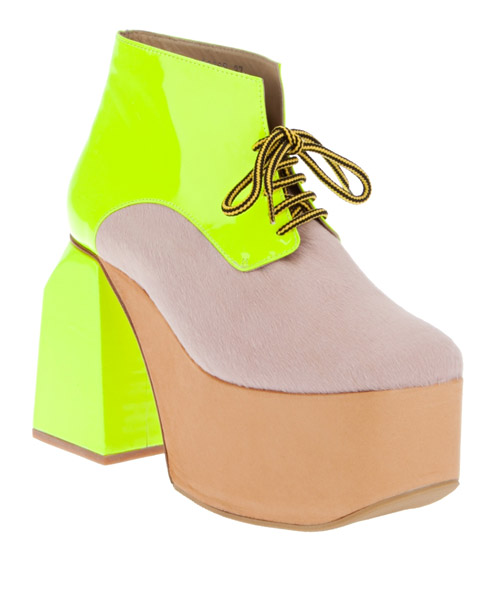
  • Flats, low heels and three inch heels ruled the streets, but every so often you’d also see sky scraper platforms pass by. For this reason, Japanese stores are full of exquisitely beautiful flat and low heeled footwear that cater to the masses who commute on foot and take public transport each day. 
  • Cycle chic, where people cycle in their normal outfits, is very much the done thing. It is not uncommon to see an extremely stylish woman cycling along effortlessly in her dress and high heels.

After nine days in Japan I am greatly reminded how good posture increases your style quotient, and that there is style life after jeans. As much as I have adored my jeans over the last few years, I am very much into wearing non-denim bottoms these days. I am also far less into “hard edge” than I used to be. Seeing the street fashion in Japan has reinforced my love for well made and refined clothing in luxurious fabrications, and elegant dressing. 

No set of photos can ever capture the variety of Japanese street style, but these will give you a sense of the wonderful ensembles that we saw in Tokyo and Yokohama.

Click here to see the full post with additional pictures »