Moving Out of Your Style Comfort Zone

Many of my clients hire me for one primary reason – to help them move out of their style comfort zone. They are bored with their current style and it’s time to change things up. Sometimes the changes are drastic, and sometimes they are subtle. Either way, I love helping people transition into new ways of presenting themselves to the world. Their journeys are always interesting, reflective, a learning curve and full of surprising aha moments.

One of the surprises: The hardest part isn’t figuring out the new style, or even purchasing all the items and creating the ensembles. It is making the change and actually wearing those ensembles. The thing is that most people are fairly resistant to change. Even though they have decided to evolve their style, and are paying me to help them do so, it ends up being harder to embrace the change than they ever expected. It’s my job to make the transition as fun and painless as possible.

When I help clients move out of their style comfort zone, I start off by asking two big questions:

  1. What are your style aspirations, goals and expectations?
  2. Are you happy with your hairstyle?

The first question they expect, but the second often comes as a surprise. I ask it because I’ve found that a person’s hairstyle has a very dramatic effect on how they view their current and future style. By addressing a client’s hairstyle right from the start, things naturally fall into place. Often the new hairstyle alone makes my client’s style feel completely different. And sometimes it is exactly the impetus they needed to get out of their comfort zone.

After in-depth discussions and reflections (and frequently that all important trip to the hair salon), my client and I start working towards achieving her desired new look. We review and edit her closet, create outfits with existing wardrobe items, shop for missing pieces and build a range of lifestyle appropriate ensembles. This style renewal process takes time and we often spread it out over several months.

During the process, my client has one important piece of homework: To road-test her new style as soon as possible.

This is when we get to the crux of moving out of the comfort zone. Even with all the right wardrobe items in place, a cheat sheet of dressing formulas, photos on how to put the new looks together, and all the encouragement in the world – it can still be challenging to put a new personal style into practice, especially when the changes are drastic.

I can only take them so far. THEY have to do the rest.

At this stage, I offer two alternatives for how they can move forward with the transition:

  1. Throw yourself in the deep end: Pick a new look outfit from our styling sessions, put it on and head out the door without thinking too much about it. Just do it. Expect to feel a little weird at first and expect outfit commentary from others. Do the same thing the next day, and the next day because practice makes perfect. With a little perseverance, tenacity and motivation, your new style will feel more “normal” – both to you AND others.
  2. First dip in your toes, then your waist and then the rest of your body: Break in your new style slowly. Mix aspects of your old style with aspects of your new style. Take an item that’s out of your comfort zone and wear it with a few trusty old wardrobe friends. Eventually you’ll work your way up to your new personal style. I spend A LOT of time helping clients to incorporate their new looks slowly but surely, holding their hand as much as I can.

Often people use both of these strategies as they move out of their comfort zone. For example, when I wanted to wear gold metal, I threw myself in the deep end. I walked out the door in gold accessories and hardware one day and that was that. I did it again the next day and the day after that, and soon it felt like me. But when I incorporated skinny jeans back into my wardrobe in 2006, I had to break in the look slowly. I first wore them with long tops and boots. As I got more confident I sported them with short layered tops, jackets and boots. I had to work my way up to wearing them with blouses and flats. In a couple of months, putting on skinny jeans felt every bit as natural as putting on a pair of bootcuts.

I’m sure you’ve moved out of your comfort zone at various points in your style journey. Do these transitional strategies sound familiar? Care to share examples of how you moved out of your style comfort zone? Were your strategies successful? And what did you learn along the way?
Team Curly or Team Straight Hair

As long as the hair is healthy and the cut and colour are flattering, I love the look of both straight and curly hair. When I see a head full of gorgeous cascading curls, it’s amazing! When I see fabulously styled stick straight hair, it’s equally amazing! But I’m still not batting for both Teams. I’m going to keep things simple and bat for Team Straight Hair because I wear my own hair straight every single day. Although my hair is a little wavy, I never wear it that way because it doesn’t feel right on me.

Over to you. Are you on Team Curly Hair or Team Straight Hair? Tell us why. Don’t feel limited by your own hairstyle. For example, if you wear your own hair straight, but prefer curly hair on most other people, feel free to join Team Curly Hair. Also, for the purposes of this poll, wavy hair falls into the Curly Hair Team.

And just because Spring is in the air, I’ll let you bat for both Teams if you can’t decide.

How to Wear Wide Leg Trousers

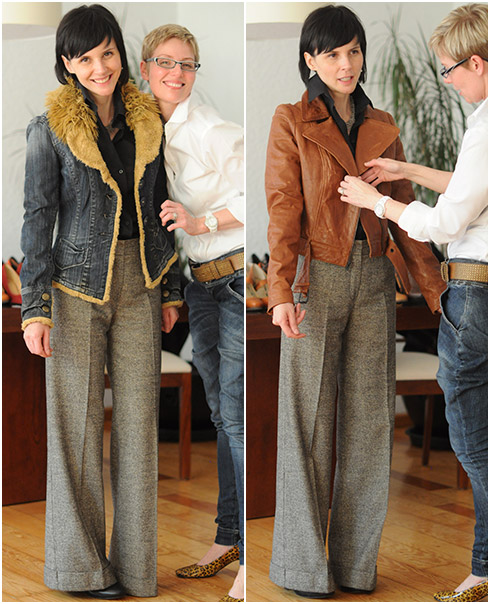
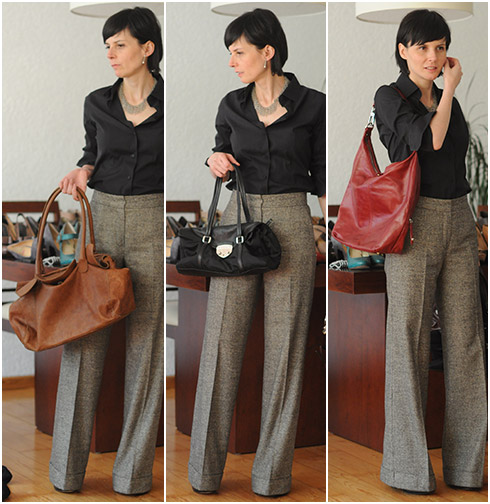
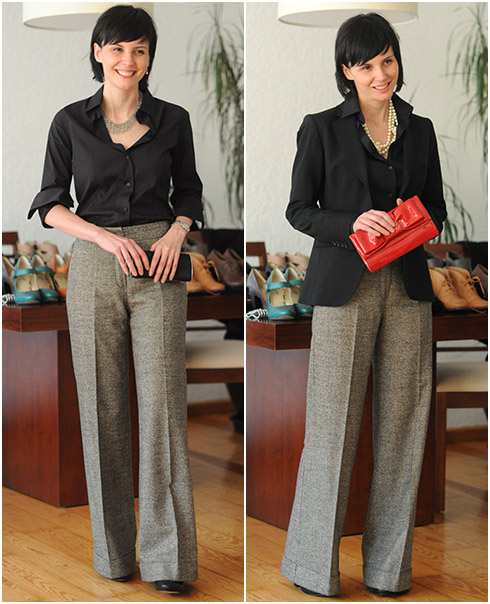
Wide leg trousers are especially popular right now so here’s a crash course on how to wear them with effortless spunk and panache. We bring back our gorgeous Fernanda to showcase the looks because her outfits speak louder than my words! Fernanda has a 40’s element to her style so it’s no wonder that she loves wide leg trousers as much as she loves skinnies.

Of course, there are countless ways to style wide leg pants. These are not rules, but merely guidelines to get you on your way:

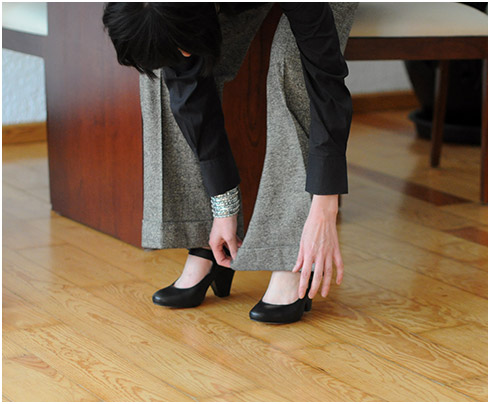
  • Hem to the correct length: I like flared trousers absolutely no shorter than half an inch off the ground. I wear my bootcuts even longer to create a longer leg line.
  • Add heels: Although some super tall, long legged gals pull off wide leg trousers with flats, I am on Team Heels for this one. Wide leg trousers scream for extra height in my book. Fernanda is wearing 3 inch heels here, but two inch heels are perfectly fine.

  • Add a belt if there are belt loops: I like to see exposed belt loops filled up with a belt. It finishes off the outfit and adds texture to the trousers. Fernanda’s tweed trousers are sans belt loops, so we left off the belt.
  • Add a waist defining top: It’s best to keep the top waist-defining when wearing voluminous trousers in order to create a structured look. Tucking in tops defines the waist, as does wearing a form fitting un-tucked top. Adding a belt over a boxier top will also do the trick. Fernanda is a button-down-shirt-gal so it’s a no-brainer to match her trousers with tucked-in shirts, which we scrunched at the sleeves for a more relaxed effect.

  • Add a short jacket: Jackets are an optional extra, but they do kick things up a notch. Tailored classic blazers no longer than crotch point work well because they add even more structure. Longer blazers tend to look a little dumpy with wide leg trousers. Cropped leather jackets add edge and denim jackets dress down the look.
  • Create the mood with your handbag: It was important to Fernanda that she understand how to dress an outfit up and down in order to get the most out of her wardrobe. So we spent time creating both casual and dressy outfits with these trousers. The shoes stayed the same, but we swapped out the jackets, jewelry and handbags accordingly. The slouchy hobo style handbags dress down the trousers, while the clutches dress things up. It’s that simple.

Now take the guidelines and create a style that’s all your own. Feel free to ask questions in the comments section below, or share further tips on how you wear wide leg trousers.

We have posted these photos and a couple of the outtakes on our Facebook page.

Roundups

Simpler Items

This week's list of top picks list is about basic pieces.

Read More

Assorted Items

Items for Summer, both in and out of air conditioning.

Read More

Casual Summer Vibes

This week's top picks are good for a casual Summer vibe.

Read More

Summery Earth Tones

These items are for those who like to wear casual earth tones in warm and hot weather.

Read More

Hints of Spring

Some tried-and-tested winning items to refresh your style for Spring.

Read More

Dressier Items

An assortment of dressier top picks might be just what the doctor ordered.

Read More

Socks that Stay Up

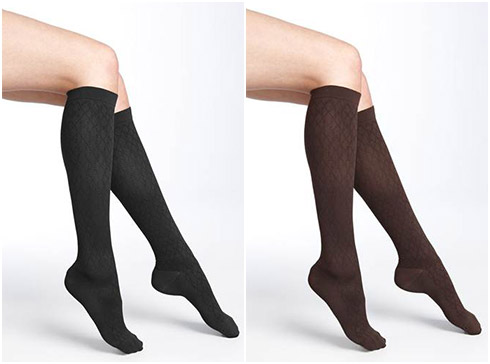
I’m ready to toss most of my sock collection and replace them with a new style, which in my book can’t be beat. I am smitten with Nordstrom’s “Stay Up & In Place” knee high compression socks. No more sagging and pulling them back up into place. I can’t tell you how cranky I get when my socks fall down and the fabric bunches under the soles of my feet. These socks stay put, making me so happy I want to shout it from the rooftops.

Although these knee high socks work really well for me (and I bought 6 pairs in black), you might not be a fan. They are quite thin, made of nylon spandex, and come to the knee. I happen to prefer thin-ish socks that are this high and have no trouble with their nylon content.

Unfortunately the full assortment of colours and patterns is not available online, but you’ll get a good sense of what they look like from the style below (the diamond patterned version). They come in four colours, three patterns and three sizes (S, M/L and Plus). They cost $12 for one pair or $30 for three pairs.

It may sound trivial to have found the ideal pair of socks, but when you have fussy feet – it’s a big thing.

Tell us about your favourite sock brands and styles in the comments section below. I’m sure you have great tips to share.

Spring Price Hikes: Cotton is the Real Culprit

This post by Michelle, a long time forum member and experienced journalist, kicks off a new effort to dig into the context of fashion and style on a more regular basis. We think it’s a fascinating industry and we hope you enjoy hearing more about it.

The warnings started trickling in during the fall of 2010, then came in a torrent as shoppers prepared to usher in the new year. We fashionistas need not be in a hurry to welcome 2011, analysts warned, since the year would bring price hikes the likes of which hadn’t been seen for more than a decade. In the past few weeks, retailer after retailer confirmed the rumours were true — clothing and footwear prices would be on the rise.

Apparel companies were forced to make the tough decisions after being squeezed by rising commodity prices, they said. Businesses in all industries are often subjected to the merciless whims of the global oil market, which can fluctuate wildly and produce huge swings in the cost of transportation and other workaday corporate needs. The pending price hike, however, has more to do with the price of cotton.

Soaring demand from China, the world’s largest cotton importer, coupled with bad weather in some of the world’s key cotton-producing regions, has sent prices skyrocketing for one of the fashion industry’s staple materials. The cost of the crop has nearly doubled in the past year and reached an all-time trading high of about $2.20 per pound on March 7.

Floods in India and Pakistan put a dent in the world’s cotton supply, analysts said, adding the political turmoil in the Middle East is likely to hamper access to alternative cotton sources and keep prices volatile.

Retailers have bowed to the inevitable and made the pending price hikes official in the past few weeks. Even as apparel giants like Gap Inc. and Nordstrom Inc. announced solid earnings for their most recent fiscal quarters, they didn’t try to sugar-coat what’s in store for their customers. Gap chief executive Glen Murphy specifically cited cotton and petroleum prices when explaining that prices were heading up for the coming season.

“We have to acknowledge the fact that there’s going to be inflationary pressures, not just for ourselves, but for everybody else,” Murphy said in the company’s fourth quarter earnings call.

Executives at Nordstrom were sending out a similar message and hinting obliquely at a strategy that other manufacturers are being more open about. Analysts predict that companies who aren’t willing to pass rising costs on to their customers will have to rely on synthetic fibers to lessen the pressure on their bottom line, and Pete Nordstrom, the company’s president of merchandising, hinted that may well be in the cards for the retailer’s in-house brands.

“I think everyone is looking at a lot of the same issues about prices appearing to be going up,” he said. “The degree to which we have any control over that is really only through the products that we source and design ourselves. And I can tell you in that end, there’s a lot of effort that’s been going on now for several months about diversification strategies in different places where we source goods, and have good manufacturers that will help mitigate some of the risk around rising prices.”

Neither Murphy nor Nordstrom would speculate on how steep the price hikes may be, but industry analysts seem to have reached a consensus estimate of about five per cent.  It’s a drastic change from the past decade, when clothing and footwear prices bucked broader retail trends and actually dropped significantly. The American Apparel and Footwear Association has previously reported that clothing prices dipped 10 per cent between 1998 and 2008. Prices for shoes slipped four per cent during the same 10-year period, a surprising feat considering overall retail prices surged 28 per cent over that time. Retailers’ efforts to combat the global recession also made the past three years an especially bountiful time for bargain hunters as stores put items on discount earlier and more often, it said.

It’s not all doom and gloom for the avid spring shoppers among us. Footwear fanatics may not feel the pinch as we stock up for the season, since leather costs have stayed comparatively stable. Industry heavyweights like Steven Madden Ltd. Are trying to keep prices in check by finding manufacturing locations with lower labour costs, according to Business Week. And some analysts are going so far as to say the price hike will be short-lived.

Sharon Johnson, a cotton analyst with First Capital Group in Atlanta, told the International Business Times that customers could start catching price breaks again as early as this fall.

“The high prices will cure themselves,” she said. “We’re only in mid-season right now for cotton crops. Weather permitting, we should see a record cotton crop this year, and mills should start lowering their prices.”

Michelle McQuigge is a Toronto-based journalist working as a reporter and editor at The Canadian Press.  You can follow her on Twitter.