Spotlight: Scotch & Soda

Scotch & Soda is a privately owned Dutch company that offers modern and creative ladies, mens and children’s apparel and accessories. The brand is inspired by the liberal and diverse outlook of its home city Amsterdam, championing individuality and the power of self-expression. 

The handwriting of Scotch & Soda items is unique. To my eye, the brand does Sporty Chic like no other. Items are formally relaxed and casually dressy in a clever way. Good quality is of paramount importance, so items last, are comfortable, and can endure the robustness of life. Colour, pattern, texture and shine are at the forefront of their designs, as are the classics that are contrasted with very contemporary detailing. Items almost always have some sort of unexpected twist, which keeps their vibe fresh and interesting. And best of all, designs are grounded by practicality because in the Netherlands, the bicycle is the number one mode of transport. And the idea is that if you can’t bike in a wardrobe item, there is no point in wearing it.

Fits are fluid and forgiving and items are seldom tight. Sizes range from XS to XL, and run quite roomy. Bottoms range from a US size 24 to 32 and can have three inseam options ranging from short to tall. Since the Dutch are tall people, the availability of 34 inch inseams is not uncommon for ladies bottoms. Unfortunately, the brand is not size-inclusive, which is disappointing. I’d love to see it extend its sizing range in both directions so that more people can wear their gorgeous items.

The collection shows a good assortment of the brand’s offerings for ladieswear. I believe there is the option to rent items too.


Scotch & Soda is committed to being a sustainable and ethical manufacturer.

Designing beautiful clothes that feel good is one thing. But we also imagine a world where we are doing good. One of our top priorities is to run our business with greater sensitivity to our planet by making more responsible choices every day that reduce our environmental impact.

Making fashion more sustainable is a tall order, and Scotch & Soda’s social responsibility policies are a big step in the right direction. For example, their stores and head office operate 100% on renewable energy. They closely monitor their transport network to reduce CO2 emissions, AND have a zero waste-to-landfill policy. They also reduce, recycle and reuse water in the manufacturing process.

Scotch & Soda takes their ethical material sourcing seriously too. They are a fur-free brand with a strong animal welfare policy. When producing denim, the brand deliberately avoids sandblasting the fabric because it produces silica dust that can be detrimental to workers’ health if performed without suitable protective wear. Instead, they use ozone and laser treatments to make the denim look worn, both of which substantially reduce water and chemical use. And like sustainable and ethical G-Star RAW, Scotch & Soda likes to make items out of raw denim, which bypasses the chemical washing and rinsing processes altogether.

Their factories are in Turkey, China and Tunisia, and comply with Scotch & Soda’s list of ethical and sustainable standards. Some factories have established child care and education for employees’ children, and organize sports and other ways for employees to relax.

Cotton is an important fibre in Scotch & Soda garments. Although it’s a natural fibre, it’s not without environmental consequences. Regular cotton crops require an extreme amount of water and pesticide usage, whereas organic cotton uses 95% less water consumption and is pesticide-free. So the brand’s cotton is purchased from the Better Cotton Initiative (BCI) and other organic sources to ensure a more sustainable fibre choice for its customers.

You can purchase Scotch & Soda from their worldwide stand-alone stores, online from their site, or from Nordstrom and Shopbop. Prices are not cheap, but are more affordable than boutiques, and they have excellent end-of-season sales.

I have grown to LOVE Scotch & Soda apparel because it’s different, colour-rich, practical, beautifully made, robust, and there’s a lot of luxe and refinement in their casual look. There are two brick-and-mortar stores in Seattle, but my favourite one is in Arnhem in the Netherlands, which I frequent with Inge whenever I visit my Dad. I have a good amount of Scotch & Soda in my wardrobe, and will happily add more. Because the fits are roomy, I have to have the bottoms altered to fit, which I’m happy to in order to have a superior and sustainably made product. I’m proud that this is yet another contemporary and hip Dutch brand that is taking its impact on the planet very seriously.

The Evolution of Skinny Jeans

When I wore skinny jeans back in the ‘80s, they were high in the rise, tight, but without stretch because the fabric technology back then was less advanced. The denim wasn’t that soft either. Sometimes I’d have to roll around on the bed to get them on. They were uncomfortable, especially when I sat down. I remember liking my high rise, pleated, paperbag waist jeans a heck of a lot more because they were roomier all over, although tapered on the legs.

Skinny jeans disappeared when relaxed straight legs, boyfriend styles, and bootcuts became all the rage. About fourteen years ago, they made a comeback. This time round they had a mid or low rise thanks to some ‘90s influence, AND a bit of stretch thanks to evolving fabric technology. Adding 2% spandex to denim was revolutionary, making them instantly more comfortable. After decades of wearing flared and wider jeans silhouettes, skinny jeans were quite the sleek change. I remember resisting them when they made their comeback, thinking this time round that they were unflattering. But before long, I got used to the silhouette all over again. I then wore skinny jeans almost exclusively for a long time.

The skinny jeans that came back fourteen years ago were very different to the skinny jeans of today. As the years went by, skinny jeans became stretchier, softer, higher in the rise, and a lot more snug. They used to create a tailored fit, but now they are more body-con. Many give leggings a run for their money. The skinny jeans of even a decade ago are what we call straight legs today. I’m not sure why skinnies evolved this way, but my guess is it’s part of fashion’s trend towards extreme comfort. Skinny jeans today, although very snug, are comfortable because they are soft and stretchy. They also work well tucked into tall boots.

If you’re after a pair of skinny jeans that aren’t so tight, look for a pair of straight leg jeans with rise measurements that are to your liking. Today’s straight legs will make you feel sleek without the cling on the upper and lower legs. They will look tailored instead of body-con, and be “your skinnies”. Relaxed straight legs are much roomier in the legs and have a ‘90s appeal. They can look equally great, but might not be as sleek as you’d like.

Over to you. What do you think of the evolution of skinny jeans?

Fashion News Roundup: January 2021

A denim-inspired home goods collection, an activewear brand branching out into sleepwear, the statement-making hair colour trend of the pandemic, and more fashion news that made headlines in January.

Fun Fashion Quote

This quote from critical care nurse Marianne Merza on not saving clothing items to wear for good only made me smile:

“In the past, I’ve kept pieces in my closet, holding out for the right occasion, but since this year has been so grueling, I’ve been trying to create special moments for myself. This dress is something I’d now wear on a walk around my neighborhood. It’s such a special dress, but what am I waiting for? I’m going to wear it to Trader Joe’s!”

Roundups

Simpler Items

This week's list of top picks list is about basic pieces.

Read More

Assorted Items

Items for Summer, both in and out of air conditioning.

Read More

Casual Summer Vibes

This week's top picks are good for a casual Summer vibe.

Read More

Summery Earth Tones

These items are for those who like to wear casual earth tones in warm and hot weather.

Read More

Hints of Spring

Some tried-and-tested winning items to refresh your style for Spring.

Read More

Dressier Items

An assortment of dressier top picks might be just what the doctor ordered.

Read More

Outfit Formula: Relaxed Winter Tweed Skirt

Winter tweed skirts are woven, woolly, warm, and worn in colder weather. They are typically a mix of flecked colours, but come in plaids and checks too. You’ll find them in all sorts of colours, but neutral versions are most popular. 

Tweed skirts are sometimes considered formal, overly classic, and constricting. I beg to differ, because as with many things in fashion and style, the devil is in the details. If you add the right support act to an item, you can effectively change its vibe.

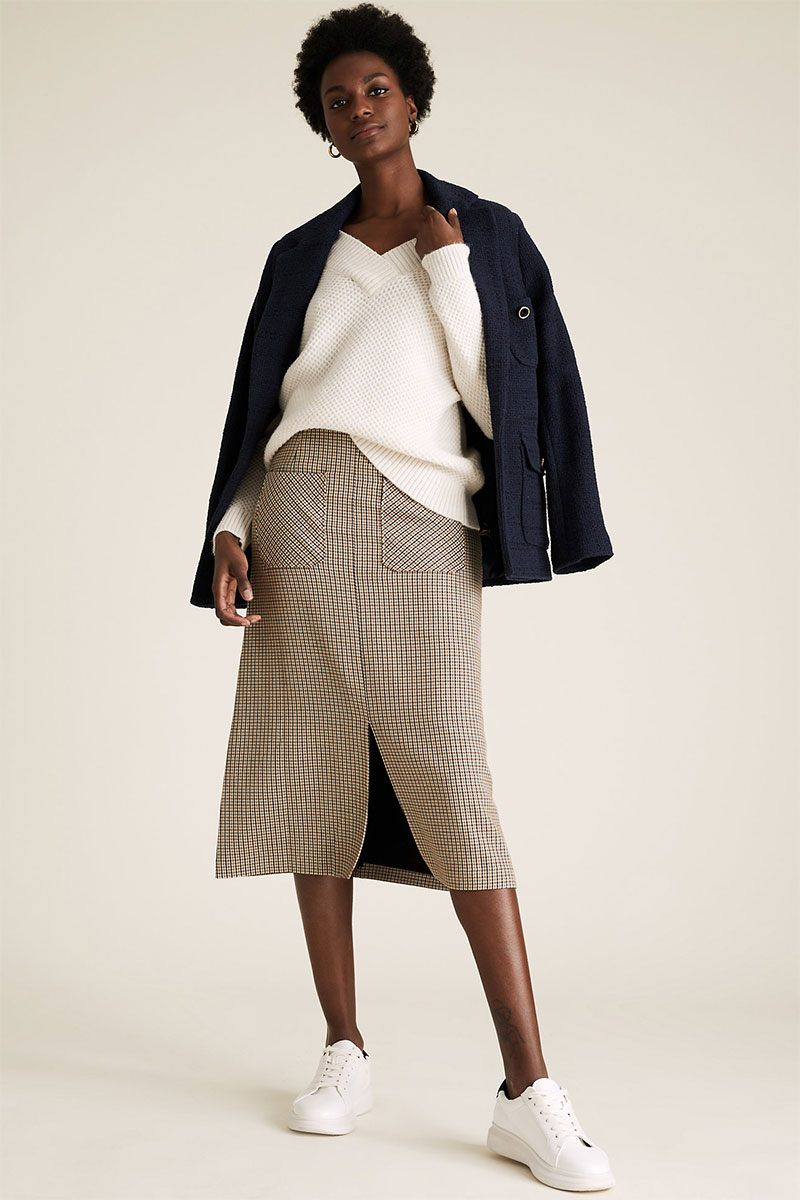
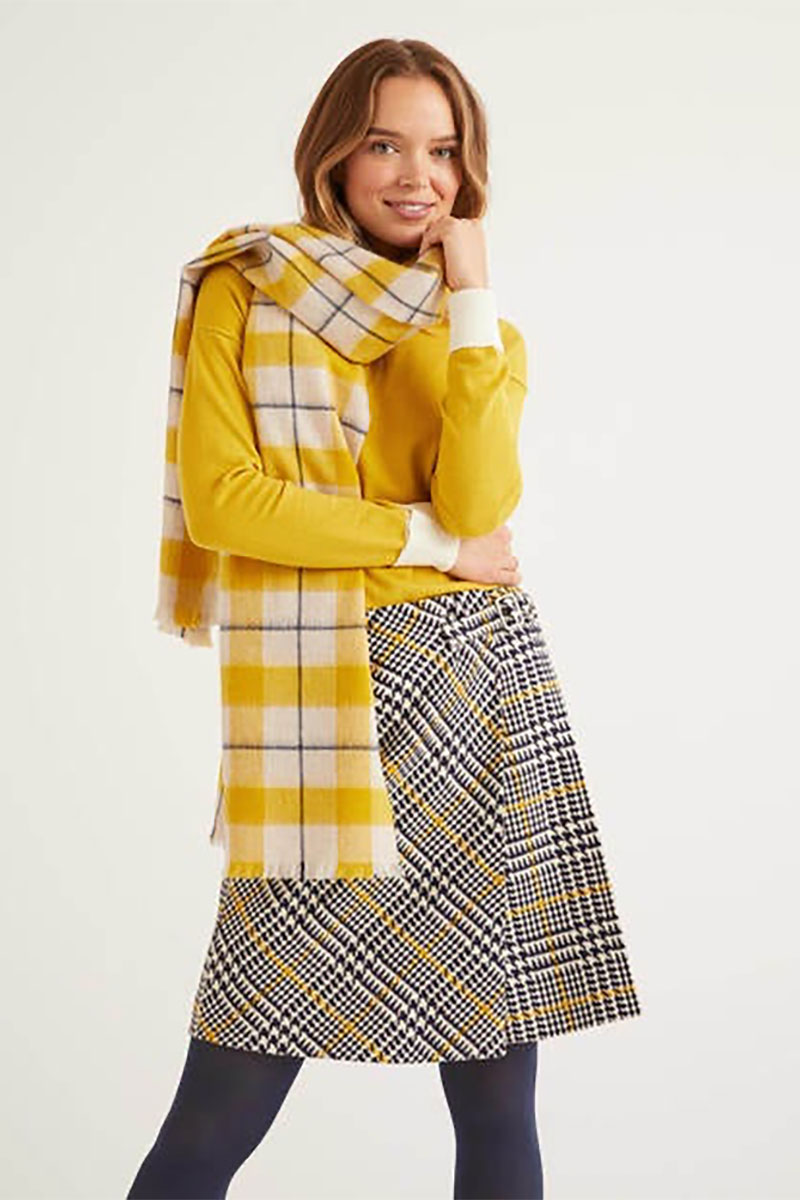
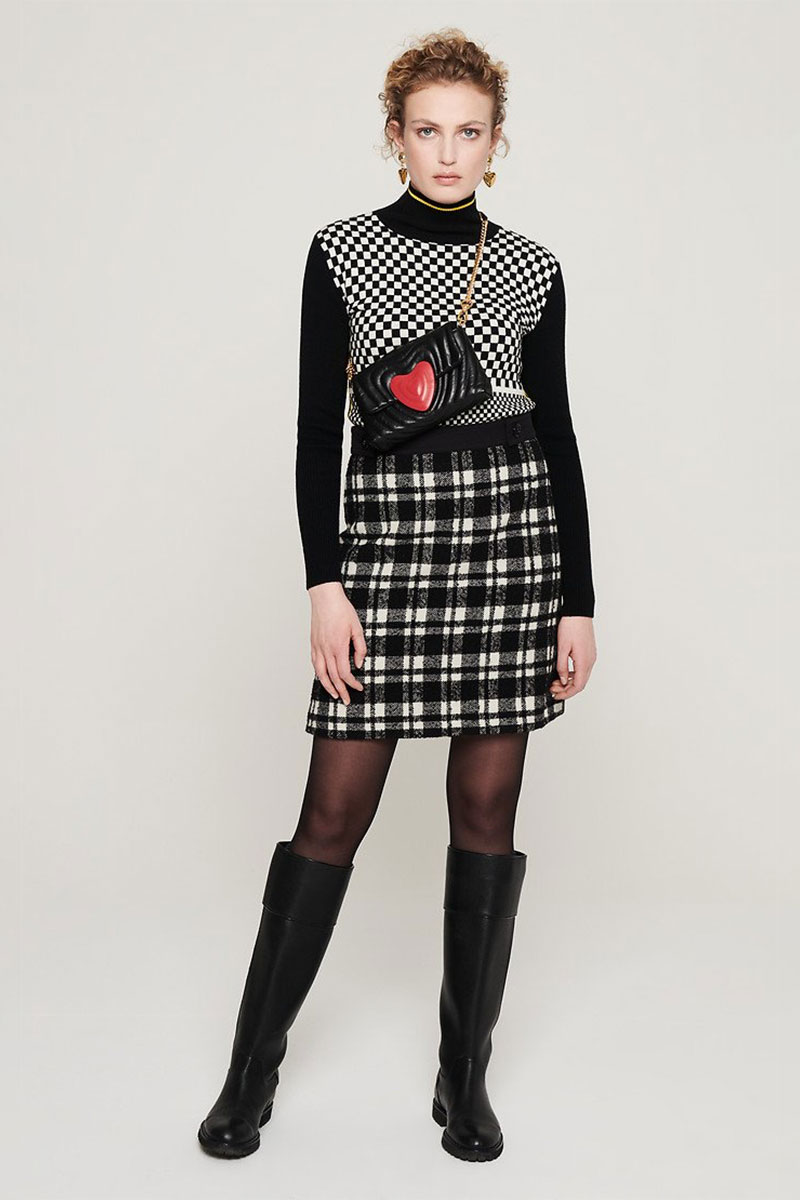
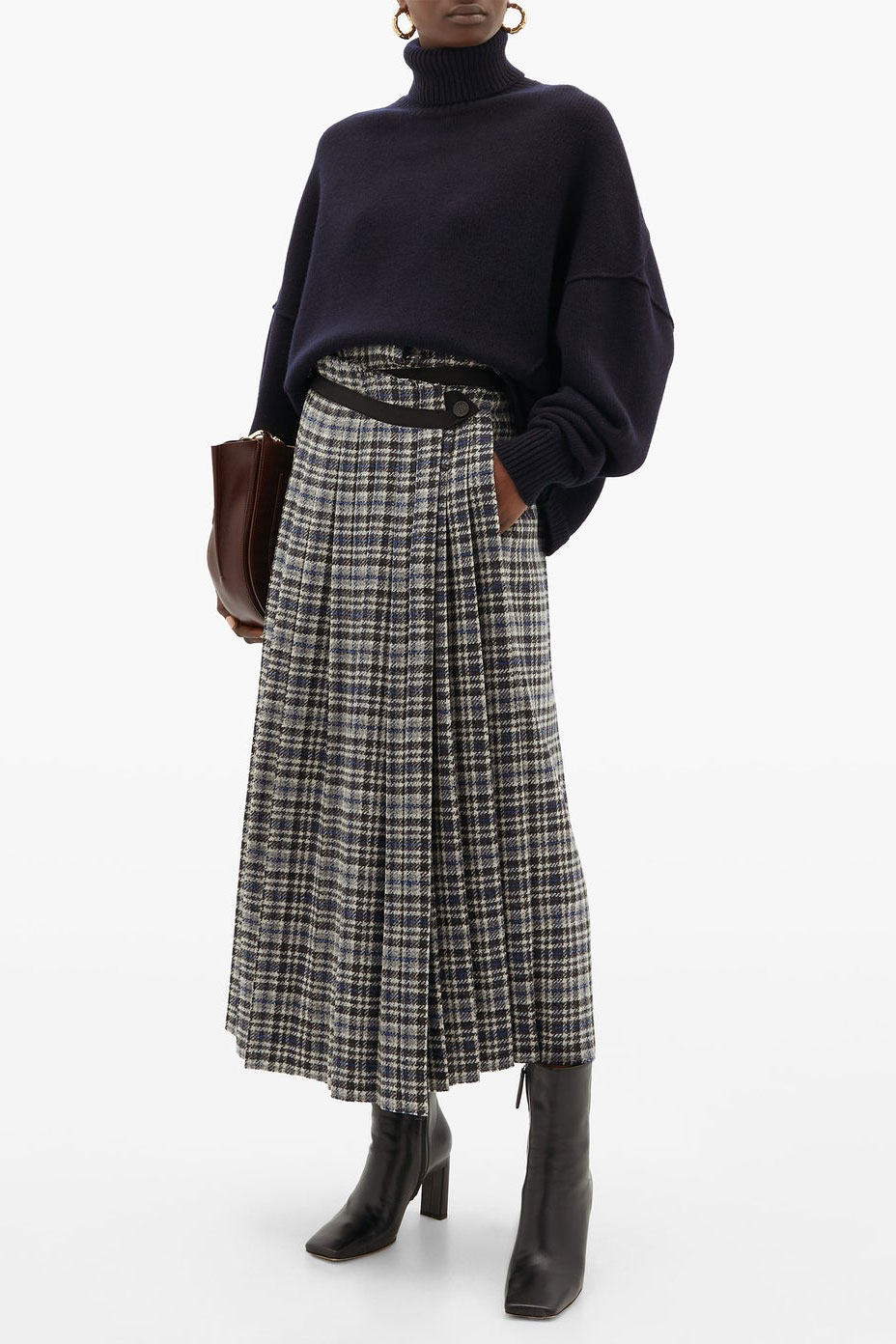
I found some tweed skirt outfits that have a wonderfully relaxed and modern vibe to them. Only one of them is a pencil skirt, which is the most constricting silhouette. For a more comfortable silhouette, choose A-lines and flares. The outfits show fine-gauge and chunky knitwear as tops to keep out the chill, but feel free to add a blouse or shirt if that’s more your thing. Choose any colour palette, and use these looks as a guide to create your own versions.

1. Sporty Luxe

This is my favourite of the four because it looks elegant, practical, comfortable and crisp. If I put the jacket on properly, add a crossbody bag, nude-for-me hosiery, and stitch up the front vent a little so that it’s less open, I could run around town doing errands in this look with Yorkie Sam in tow. On that note, combine an A-line tweed skirt with a roomy pullover. Personally, I love the knee-covering length of this skirt, but you can go shorter. Semi-tuck the pullover, or wear it untucked. Complete the look with sneakers and a jacket or coat. I like the way the white sneakers and top match, thereby pulling the look together. The casual pullover and sneakers relax the skirt.

Sporty Luxe

2. Kilted and Pattern Mixed

Combine a kilt with a pullover that picks up a colour in the pattern of the kilt. Add a patterned scarf in the same colour palette as the kilt. The scarf needn’t be another plaid or check. It can be any pattern as long as the colours are similar to the rest of the outfit. Add hosiery, boots and topper that work with the outfit. I don’t fancy the heaviness of the navy opaques and boots styled with this outfit. I’d have gone for something lighter and cream boots. That said, topping off the outfit with a navy coat would balance out the heaviness. The casual pullover and scarf relax the skirt.

Kilted and Pattern Mixed

3. Black Support Act

Adding a black support act to a tweed skirt that contains black in the pattern is usually a home run. Here, this black and white tweed mini has been combined with a black and white checked cropped pullover that simply looks like a smaller scale of the pattern of the skirt. But you can substitute with a solid black top to match black hosiery, and flat tall or short black boots. Throw in a bag, coat or jacket that works with the pattern of the skirt. The flat riding boots and chunky pullover relax the skirt. These types of mini tweed skirts look sensational on some of my petite clients.

Black Support Act

4. Casual Elegance

This is the dressiest option. Combine a long flared tweed skirt with a very roomy pullover that picks up a colour in the pattern of the skirt. Semi-tuck it to create some structure by hinting at a waistline. The black belt here is part of the skirt, and matches the black boots. The tailored heeled booties amp up the dressiness of the outfit. Black hosiery and pumps, or tailored tall boots could work too. You can top off an oversized pullover with a ruana, cape, or poncho. The extreme slouch of the chunky pullover relaxes the skirt. Add jewellery, watch and eyewear as desired.



Casual Elegance

Embracing Your Natural Hair Colour

We add colour to our hair in all sorts of ways. We can go lighter, darker, or richer than our natural colour. We can change the colour completely, cover the grey, or throw in a rainbow look just for fun. It is a personal decision. We simply have to weigh up the pros against the cons of the time, effort, and expense involved, and decide what suits us best.

For many of us, one consequence of the pandemic is that we can’t have our hair coloured as often as we did before. As a result, our natural hair colour has been coming through. Pre-COVID, I had a partial foil of platinum highlights added to my hair every six weeks. When the pandemic struck I went without for four and half months. My hair is naturally blonde without any grey, so the grow-out was reasonably subtle.

As soon as I felt comfortable having my hair re-highlighted, I did just that. I’m still not having it coloured as often as I used to, but I’m adding the platinum blonde bits when I can because, to my eye, it’s more flattering with my complexion. It’s dyed to the colour it used to be naturally when I lived in a sunny Mediterranean climate and my hair was bleached naturally by the sun. Since living in grey Seattle, my hair has gotten darker and I don’t like it as much.

Personally, I’m not embracing the natural colour of my hair just yet, but plan to do so when I go grey. I fancy the idea of a natural silver pixie at some point, and am looking forward to it. On the other hand, some of my friends and clients have taken the opportunity during the pandemic to stop colouring their hair alltogether. Many have opted to let the grey come through, hang in there with the grow-out, and embrace their natural colour. This means saying goodbye to the time and expense of root touch-ups every three weeks, which I imagine to be quite liberating.

Over to you. I’m curious to know whether the pandemic has made you feel like embracing the natural colour of your hair more permanently, or at least for a while.