It’s back to first principles as I update the body type dressing guidelines in the context of current fashion trends. I recently covered the inverted triangle and the adorable apple. The pretty pear is next. If you’re unsure of your body type, or new to the concept of body types, then you might want to read my refresher on identifying your body type before tackling this post on the pear shape.
Three important points before I begin:
- These are guidelines, not rules: The information here should be viewed as a helpful starting point when you’re unsure about how to create conventionally flattering and balanced proportions for your shape. Everyone has different figure flattery priorities and sometimes the most stylish outfits ignore the guidelines completely.
- The guidelines are general: My philosophy is to define a few simple body types and then be flexible when working with them. Most of us are a mixture of a few body types and don’t look exactly like one of the 5 prototypical shapes. Filter through the information and use the parts that make sense for your shape.
- There is one rule to keep in mind: Have fun with fashion.
You are pear shaped when your bottom half is larger than the top half. This means that you often wear a larger size on the bottom. You carry extra bits around the hip and thigh area, and you may be generally curvy. Your shoulder line is narrower than the width of your hips and thighs. Some pear shapes have sloping shoulders. Your shoulders may also be square, but they are not broad (do not confuse square shoulders with broad shoulders). Your waist is relatively small and well defined. Bust size varies, as does the length of the waist and leg line.
Creating conventionally flattering proportions means balancing the top and bottom parts of your body. This is achieved by drawing attention upward, defining the waistline, de-emphasizing the bottom, and elongating the leg line.
It’s the pear shaped body type that will probably be the most challenged by unstructured fluid and oversized trends. One, because often your natural inclination is to define the waist and create a very fitted look on top because it makes you feel your slimmest and most attractive. And two, because traditional body type guidelines have told you over and over again to stay away from tops that are waist surrendering and trousers that are baggy and slouchy. The good news is that with a little attention to fit and proportion, I believe you can wear trendy shapeless pieces if that tickles your fancy.
Before we cover silhouettes, a few words on the foundation underneath because it affects the fit of the outer layers. First, wear the best bra. Lifting the bustline adds structure to the midsection, and creates curves in all the right places. Second, shapewear for the hip and thigh area is an option, especially for formal occasions, but it is by no means essential.
De-emphasize, Define, Elongate
This is the first part of a conventional approach to creating balance between your upper and lower halves. It involves deemphasizing the lower half, defining the waistline and elongating the leg line.
Skirts and Dresses
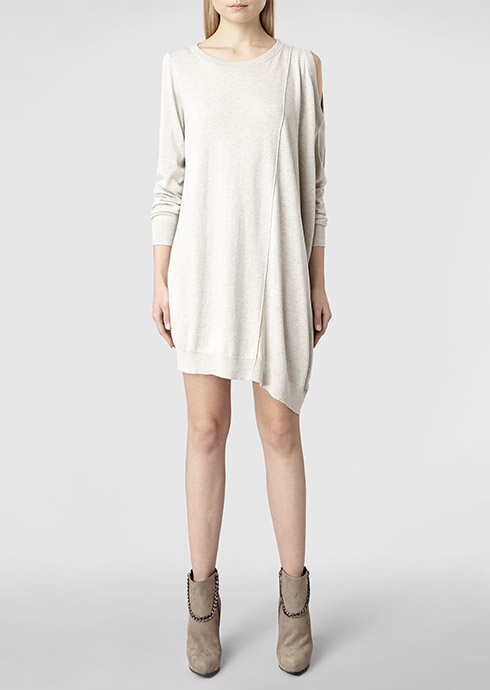
- It’s important to understand that volume on the hip and thigh, in small or larger doses, is your friend because it eliminates cling and bad fit in that area. Any style that follows your natural A-line shape is a match made in heaven. That’s why you were made for skirts and dresses that are fitted at the waist and voluminous down to the hem. Paneled and stitched down pleated skirts, and fit-and-flare dresses for the classics. Drapey asymmetrical styles for the arty eclectics.
- Steer clear of bias-cut skirts.
- Trapeze and trumpet skirts with vertical panel detailing are great because their mermaid shape complements your curves. Stay away from the versions with horizontal cut-lines.
- Dresses with fitted top-knot chest detailing under the bust, and that skim over the bottom in a gentle A-line silhouette are ideal.
- Wrap dresses work well with a larger bust. Pear shapes with a small bust tend to drown in the top half of a wrap dress.
- Empire cut tunics and dresses in soft fabrics can work on a small or regular size bust. Stay away if you’re large in the bust.
- No need to stay away from fitted sheath dresses though. Wearing a formfitting dress or skirt that actually accentuates instead of de-emphasizing your proportionally larger hips is not a bad idea. It’s merely a variation on the hourglass silhouette and just as fab. You might need to have the torso altered. Or choose fabric with stretch to create a more forgiving fit over the hip and thigh.
- For those who are more dramatically pear shaped and feel strongly about de-emphasizing the bottom, wear knee-length pencil skirts and sheath dresses with side seams that are straight from the hip down to the hem (no tapering).
- Pencil skirts that taper at the hem can look fab when they are longer (over the knee is key) and worn with an A-line top or tunic because it camouflages the hip and thigh area. Or try it with an oversized top that has a structured welt and/or high-low hemline. Wearing volume on top makes your bottom half look smaller, especially when you’re wearing a fitted bottom like a tapered pencil skirt. You might need to add a heel to this combination if your leg line is short. Keep the contrast between the top and bottom low for an extra elongating effect, although this is not essential.
- It’s flop proof to wear pointy-toed footwear with all outfits because the point elongates the leg line, which creates conventionally flattering proportions. But round-toed shoes are fab if you stay away from pairing overly stumpy round toe silhouettes with skirts and dresses.
- Wearing some sort of heel (even if it’s just an inch) whenever you can will give you the height that slims down curves. This doesn’t mean that you can’t wear flats. You just have to be careful with the pairing, opting for pointier toes rather than round toes.
- Wearing low contrast footwear on the leg line with skirts and dresses, which includes trendy ankle straps, does wonders to elongate and slim down the bottom half.
- In cooler weather heeled and tailored knee-high boots that are slim at the ankle, worn with skirts or dresses, is an excellent leg-flattering look.
Trousers and Jeans
- Dark solid bottoms are visually more slimming than light-coloured and patterned bottoms.
- Keeping jeans and pants simple, streamlined and fairly structured is one way to go, thereby saving the visual interest for your tops. In this case, keep the front part of your pants free of detail and mid rise (not too high or low). Make sure that there is enough ease through the hip and thigh.
- Tailored bootcut and trouser jeans are probably the most flattering shape because the flare on the hem balances out the width on the hips. Wide legs are the same if you wear them at the right length (hems should almost skim the surface of the ground), and with a heel to elongate the leg line. And I’ll once again mention the power of pointy toe footwear as a leg lengthening strategy especially when you wear flats and low heels.
- The most common jeans and trouser fit challenge for pear shapes is the too large waist when the rest of the bottom fits on the hips and thighs. Often, it’s an easy alteration to have the waist taken in. Alternatively, if the waist is only a little big, wear a belt and match the look with a partially tucked fluid top. Or faux tuck with a welted top.
- Do not size down on bottoms to fit the waist. This often results in a fit that’s too tight on the thighs and hips. Fit the largest part of your body and tailor as needed. Curvy fits are already roomier on the hip and thigh so start there when looking for modern classic jeans and trousers.
- Side entry pockets are tricky with bottoms in a tailored fit, so opt for 5 pocket jeans styling, slanted pockets, or flat fronts instead.
- Trousers that pull and whisker is a common problem because the fabric clings to the curves of your thighs. Here are nine solutions to the whiskering problem, the most important of which are to size up, choose curvier fits, and choose sturdier fabrics with less stretch.
- Curvy women can wear skinnies or straight legs. It’s more fashionable to wear them less tight so opt for a tailored or fluid look instead of a body con fit.
- Straight legs often look better on pear shapes because the extra width on the lower leg balances out proportions. Wear them regular length or with scrunch to further balance out proportions and lengthen the leg line.
- There is no need to hide your hips and thighs with a longer top when (1) the straight legs aren’t that tight and (2) you wear a partially tucked roomy top. Remember again that volume on top makes your bottom half appear narrower. If you lived through ‘80s fashion, that point should be crystal clear.
- If you’re still shy about showcasing your hips and thighs in slim-fit bottoms, add longer A-line tunics to camouflage the area. Belted tunic button-down shirts look incredible so be sure to give that look a go.
- Tucking skinnies or straight legs into chunky knee-high boots is another effective way of balancing out your silhouette. This way of wearing skinnies might not require a longer top because you’ve balanced out the look with tall boots. Keep the colour of the bottoms and boots low contrast if you want to create a slimmer and longer line.
- Keep walk shorts knee-length and straight from the thigh down.
- Unless you have a very long leg line, and are prepared to wear heels and a tucked top, stay away from straight and stumpifying ankle length cropped pants. To my eye, it’s one of the most unflattering looks on a pear shaped body. Wear shorter streamlined cropped pants like clamdiggers, or some of the roomier and trendier styles I discuss below.
Advanced: Wearing Roomier Bottoms
Now I’m going to focus on the trendy jeans and trouser styles you’ve been told not to wear because they’ll emphasize your hips and thighs. Actually, I strongly disagree with that notion because to my eye, baggier and roomier bottoms actually slim down the thigh and hip area more effectively than wearing tight bottoms. You tend to look slimmer when your clothes are a little roomier. As with skirts and dresses, volume on the hip and thigh area is your friend because it eliminates cling, pulling and whiskering. It’s a question of getting the volume just right, and pairing it with a flattering support act.
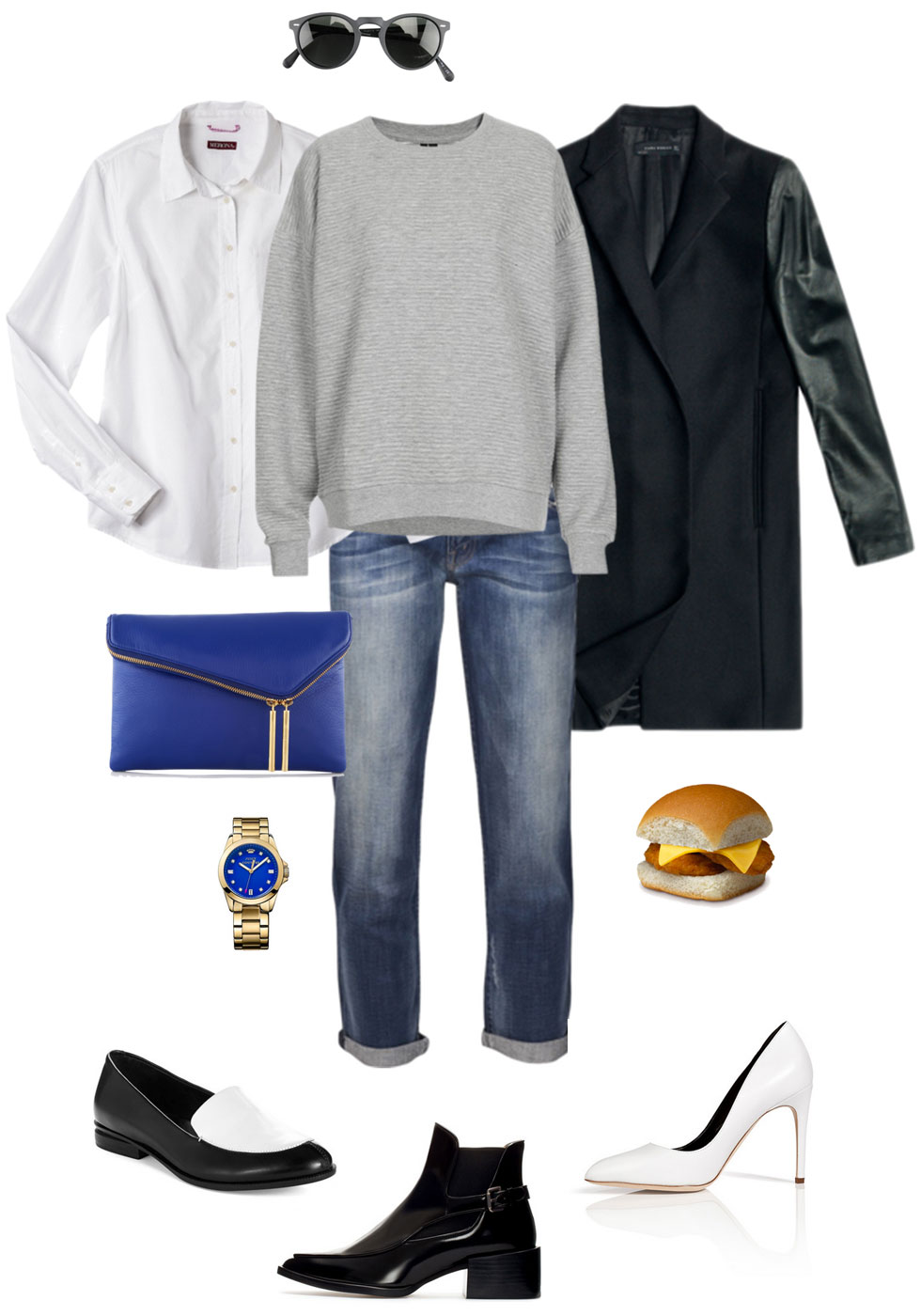
- Wear boyfriend jeans. All my pear shaped clients have boyfriend jeans, and most of them prefer the style to skinnies and straight legs. The room around the thighs and hips is not only comfortable but visually slimming. Wear a slimmer fit, add a belt to prevent them from falling down, and match with a fitted or fluid top (tucked or partially tucked). Keep the hems unrolled or rolled, and match with tailored booties, a dainty heel, sandals or refined slipper flats.
- Opt for relaxed skinnies that are cut roomier all over. Or try sizing down in boyfriend jeans that are tapered at the hem to create a similar silhouette. Sizing up in straight legs is another option, but will require a belt and waist adjustment.
- Wear both boyfriend jeans and relaxed skinnies lower on the hip. That will help rectify the gap on the waist.
- Track pant styles in silky wovens or casual knits, with elasticated waistband and tapered hems, work well when the rise is not too high. The roomy fit around the thigh is flattering, while the elasticated waistband fits your defined waist. Match with fluid or oversized tops with high-low hemlines, and/or welted tops. Or short A-line tunics for an arty look. Wear tailored footwear or add a tailored jacket for extra structure.
- In the same vein, baggy harem pants, with or without a dropped crotch point, look amazing because they define the waist while giving the thigh and hip ample room. Structure is created with the tapered hem widths. You can further create structure by pairing the look with a tailored jacket.
- Slouchy trousers that are baggy in the thigh area with a slight dropped crotch point, tapered hems and leg scrunch, are actually very flattering. Wear them lower on the hip with a tucked or partially tucked top.
- Trousers with pleats on the waist can be surprisingly flattering because the volume of the pleats creates a roomier fit around the thigh and hip area. The fabric glides over curves instead of clinging to them.
- Yes, you can wear white and light bottoms. Follow these steps to create a flattering effect with white jeans and trousers.
- If trousers and jeans make you feel less than fab no matter how you slice and dice it, stick to wearing skirts and dresses.
Drawing Attention Upwards
The second part of conventional figure flattery for pear shapes is to draw attention upwards.
Tops
- Most pear shaped gals have relatively small waistlines, so it makes sense to showcase this part of the body. Opt for shirts, blouses, knit tops, tees, and knitwear that are shaped at the waist. Formfitting waist definition can work if it doesn’t give you muffin top. Or opt for a slightly fluid fit that is on the looser side of tailored, but gives you shape. Make sure the top has a welt for structure and isn’t too short.
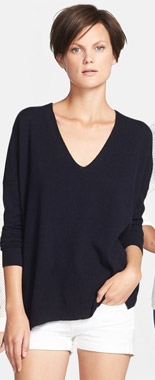
- Wear V-neck tops and create V-neck shapes with your layers. V-shapes elongate the neck, minimize the bust, and draw attention to your slim midsection.
- You were made for the waist-cinching belt. Wear it over tops and dresses for extra definition and to lengthen the leg line.
- Peplum tops are great over slim-fit bottoms.
- Layer your garments to add visual interest to your torso. Layer a fitted shorter jacket, gilet, waistcoat, vest or sweater over an untucked shirt, blouse or tee for the most flattering effect. The layers create a visual balance between the top and bottom half of your body.
- Wearing an eye-catching colour on top draws the eye upwards.
- You wear sharp shoulders, poufy sleeves, sleeves with gathered crowns, chunky knitwear and epaulettes with the best of them. Most styles that broaden your shoulder line work well.
- Boat necks, slash necks, shirt collars and turtlenecks work well on long-necked pear shapes. Choose lower necklines if you are short waisted, large in the bust, or short in the neck.
- Accessorizing the top part of your body with necklaces, eyewear, scarves, earrings, hair clips (but not all together), creates more visual interest.
- Tops with wide cuffs, bell sleeves, ruffles, zippers, embellishment, rushing, vertical seaming detail, large collar/lapels, wraps and princess lines are good choices. These design features naturally draw the eye upwards.
- Raglan sleeves are excellent because they magically strengthen a dainty shoulder line, and soften a broad shoulder line. Make sure the neckline is cut close to the neck for shoulder structure.
- Top length is important when wearing tops untucked over pants and jeans. No shorter than a few inches above crotch point is best. Shorter than that tends to visually accentuate larger hips and thighs. Of course, wearing shorter tops partially tucked or faux tucked works well with roomier bottoms like slouchy trousers and boyfriend jeans.
Jackets
- Structured jackets with curved hems that are longer in the back are flattering because the asymmetrical line of the hem on the thigh visually slims the hip area.
- Structured jackets and coats with strong shoulder lines that define the waist are excellent, although lengths can be tricky. Short, waist-defining jackets are excellent over skirts and dresses. They tend to work less well over trousers unless they are moto jackets. Wear moto jackets open so that they DON’T define the waist, but instead create volume on top, which makes your bottom half look relatively smaller.
- Trapeze jackets, swing coats and A-line styles are great as long as they are fitted through the shoulders and matched with a longer, slim fit-bottom, or bootcuts.
- Belted jackets and coats are good if there is enough room on the hip.
- Stay away from jackets with sloppy shoulder lines, especially when you have a long neck. You need structure around the shoulder neck point as well as structure on the shoulder point in order to create shoulder width. That means collared jackets, or jackets that are cut high on the neck. Collarless jackets are fine on those with shorter necks as long as the necklines are cut close to the neck.
- Lengths that finish over your widest part — straight across the top of the thigh — can be unflattering. But the problem is solved when you wear the top or jacket with a low contrast bottom, thereby eliminating the cutting horizontal line.
- Wear jackets open instead of closed. This creates a vertical line down the centre front of the body, which is very slimming.
Advanced: Forgoing Waist Definition by Creating Just Enough Structure
The conventional wisdom for pretty pairs is to define the waist, but surrendering the waistline is more fashionable and on trend. The good news is that you can sport this look if less structured styles tickle your fancy. It’s all about creating just enough structure in the rest of the outfit so that you feel attractive and streamlined.
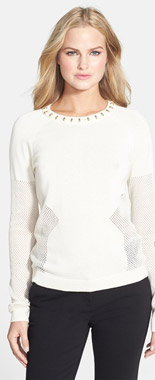
- Wear oversized welted and/or high-low tops and knitwear with slim-fit straight legs, and pencil skirts. Scrunch the sleeves, and add tailored footwear for structure.
- Don’t turn away voluminous tunic tops and dresses. If they’re A-line and structured in the shoulders, chances are high that they will work.
- Masculine blazers that are fitted on the shoulder, but cut straight in the waist, work well when the stances are low, the sleeves tailored, and the length below crotch point. The longer length camouflages the hip area. The lower stance creates a dramatic V-shape which balances out the width of the hips. The tailored sleeves and fitted shoulder add structure. If you’re very short waisted, opt for a slightly higher stance in the jacket. Wear this style over boyfriend jeans, straight legs, relaxed skinnies, slouches, or silky track pants.
- Ponchos and capes are fab over slim fit bottoms or bootcuts. Their dramatic volume makes the bottom half look smaller.
- Dolman-sleeved tops are great when the hems are welted and the sleeves are slim for structure.
- Voluminous drop shoulder tops work when the necklines are high, and the length is either on the hipbone, or longer than the widest part of the hip. The high-low hemline is excellent for extra structure. Wear the shorter top with roomy bottoms and the longer top with slim-fit bottoms.
- Avant-garde styles with lots of voluminous drape are best when they are structured in the shoulder and longer than the widest part of the hip. Wear them with slim-fit bottoms, or bootcuts, and a heel.
One more general dressing tip. Wear a column of colour under a topper to create a long lean line that is extra slimming
Please share your own tips on how to flatter the pear shaped body type in the comments section. If there are additional questions on how to wear particular looks and trends, please ask below and we’ll get you sorted.